Clydesdale
The Clydesdale is one of the gentlest giants of the equine world. Famous for its immense strength, large feathered hooves, and appearance in iconic commercials.
Start from the resources hub and jump back to the Horse Breeds index.
Advertisement
Overview
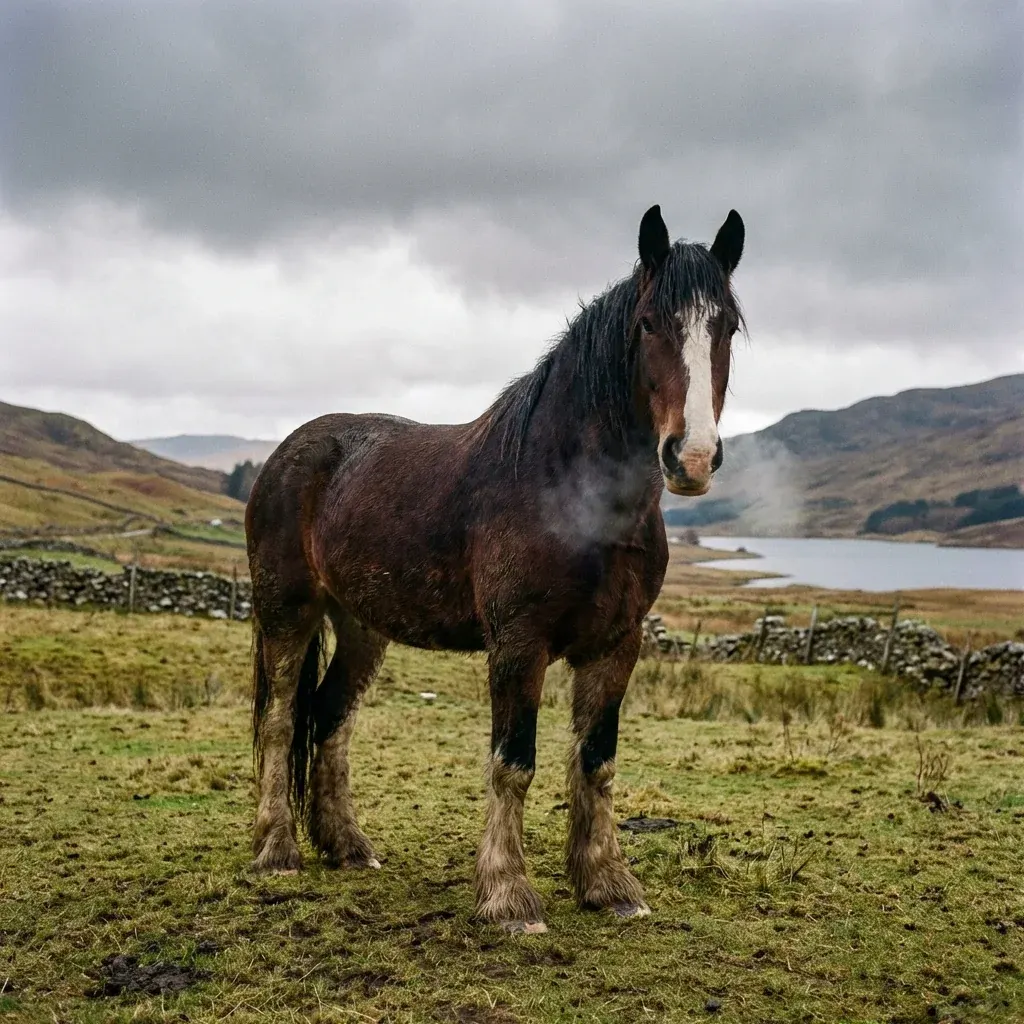
If you’ve seen the Budweiser beer commercials, you’ve seen a Clydesdale. They are heavy draft horses originating from the Clyde Valley in Scotland. Despite their intimidating size, they are known for being “gentle giants,” easy to handle and with a bombproof temperament.
Origin & History
Developed in the 18th century from Flemish stallions imported to Scotland and crossed with local mares. They were the driving force of agriculture and industry, pulling plows on farms and heavy carts in the cities of Glasgow and Edinburgh… today they remain symbols of strength.
Temperament & Personality
They are famous for their coolness.
- Fireproof: Historically they didn’t spook at anything, not even city traffic.
- Docile: Despite weighing nearly a ton, they are usually very respectful of personal space if well-educated.
Physical Characteristics
A living tank.
- Size: Can exceed 18hh (1.80m) and weigh 2000 lbs (900kg).
- Feathers: Long, silky hair on the lower legs.
- Hooves: Their hooves are the size of dinner plates.
Foal Stage
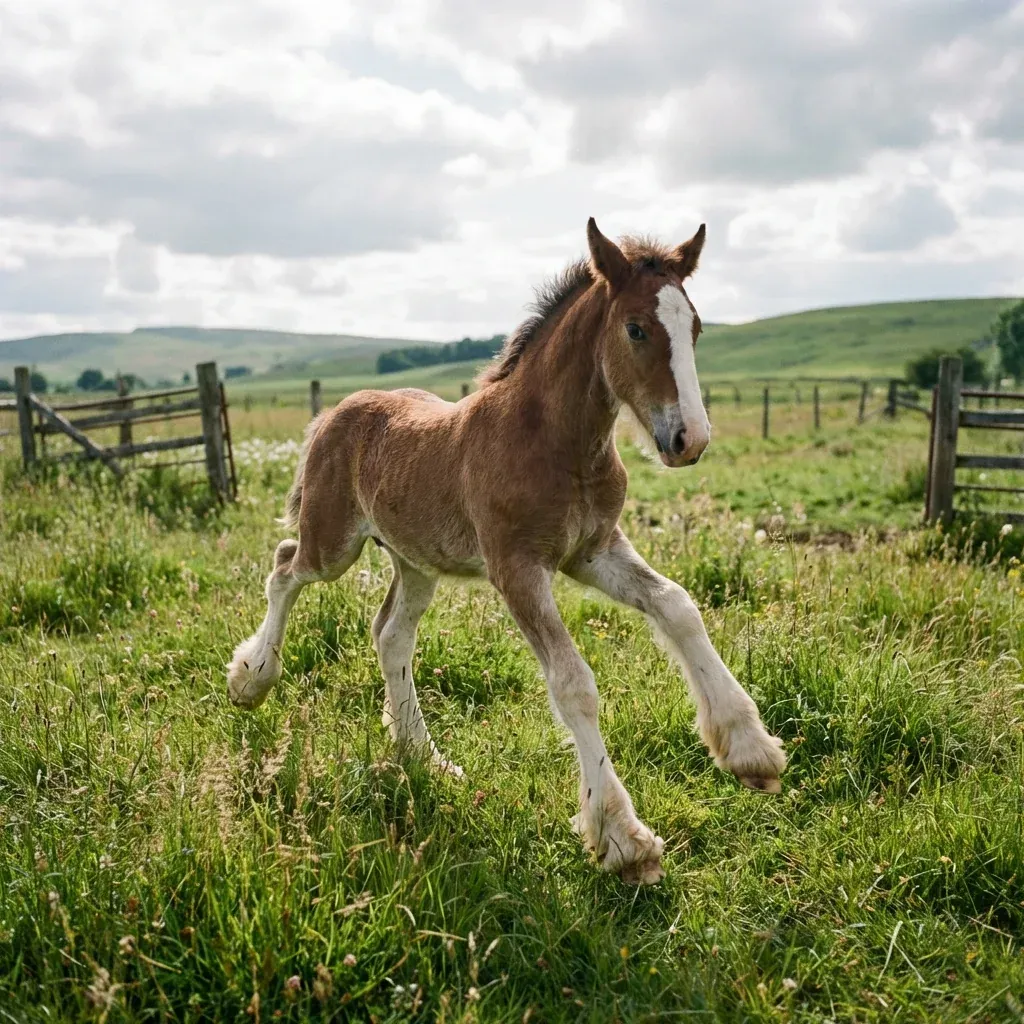
They are born big and grow… even bigger.
- Growth: They grow very fast. Vigilant diet management is vital to avoid developmental orthopedic problems.
- Handling: Crucial to teach manners from day one. An ill-mannered 900lb foal (at 6 months) is dangerous.
Adult Stage
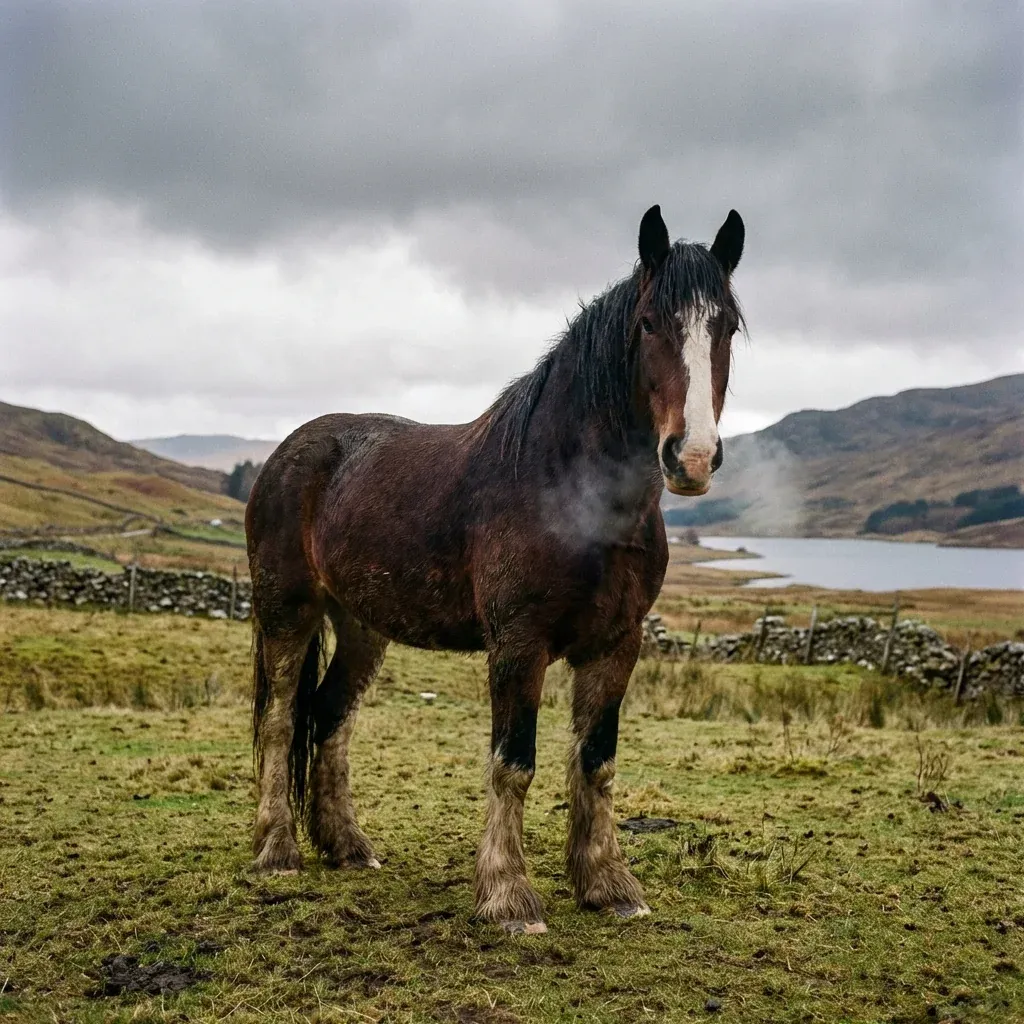
- Action: They have very high and flashy knee action for a heavy draft horse.
- Modern Use: Today they shine in driving exhibitions, parades, and even as recreational riding horses (if you have a saddle big enough).
Health & Care
- CPL: Chronic Progressive Lymphedema. A disease affecting the legs of feathered breeds. Requires constant monitoring.
- Shoeing: Shoeing a Clydesdale is expensive. Their shoes are huge and require a specialized farrier.
- Food: They eat… a lot. Prepare for a substantial hay bill.
Needs & Routines
- Leg Cleaning: Feathers require daily care to prevent “mud fever” and mites.
- Space: They need large paddocks and XXL-sized stalls.
Advertisement