Great Dane Temperament, Size, and Care Guide (2026)
If you are researching great dane temperament and size, you are usually trying to answer one practical question: can you realistically live well with a giant dog every day, not just admire one at the park.
The Great Dane is often called the “gentle giant,” and that description can be true in the right household. But size, strength, growth speed, and management needs are substantial. A calm adult temperament does not cancel out the logistics of raising and handling a very large dog.
This guide explains what matters before you commit: personality, size expectations, exercise and training routines, health considerations common in giant breeds, and how to choose daily walking gear safely.
For a quick profile first, you can start with the Great Dane breed page and return here for the full lifestyle breakdown.
What Is a Great Dane?
The Great Dane dog breed is a giant working breed known for height, long legs, deep chest, and generally people-oriented behavior when properly socialized. Despite the name, the breed’s development is closely tied to Germany, where large hunting and estate dogs were selectively bred into the modern Great Dane type.
Historically, these dogs were valued for strength and presence. Modern Great Danes in family homes are usually companion dogs, but that physical scale remains. Even a friendly Great Dane can accidentally pull, bump, or overwhelm handlers if training and equipment are not prepared early.
Core profile in simple terms:
- giant body with fast growth in youth,
- often affectionate and owner-focused,
- moderate activity needs compared with high-drive herding dogs,
- high management needs because of size.
A common misunderstanding is assuming giant size equals low training effort. In reality, bigger dogs require earlier structure because bad habits become risky quickly.
Great Dane Temperament and Personality
When people search great dane temperament, they usually want clarity on whether the breed is easy, stable, and good with people. Most well-raised Great Danes are social, sensitive, and relatively calm at home, especially after maturity. They tend to bond closely with their family and often prefer being near people rather than isolated outdoors.
That said, temperament is not automatic. Poor socialization, inconsistent routines, or weak leash handling can create stress behaviors in any large dog. Great Danes are not typically “hard” dogs in the same way some independent guardian breeds are, but they still need consistent boundaries.
Family life and children
Great Danes are often good household companions and can be gentle with children in their own family. However, “good family dog” does not mean no rules.
Important points for family life:
- supervise interactions with small children,
- teach polite greeting behavior early,
- prevent jumping from puppyhood,
- maintain calm routines around doors, meals, and visitors.
A giant puppy can feel adorable while jumping, but the same behavior in a full-sized adult is a safety issue. This is one reason early handling and leash manners matter so much for this breed.
Other dogs and socialization
Most Great Danes can live well with other dogs when socialization is steady and controlled. Because the breed is physically imposing, small social mistakes are often interpreted by other owners as serious, even when intent is playful.
Use practical socialization, not chaos:
- choose calm, predictable dog interactions,
- avoid crowded high-arousal settings if your dog is overwhelmed,
- reward focus and neutral behavior,
- build reliable recall and leash control before freedom increases.
If your Dane shows pulling or overexcitement, review how to teach dog not to pull on leash before strength and habit become harder to manage.
Size, Weight, and Growth Expectations
The great dane size question is central because this is one of the tallest dog breeds in the world. Adults vary by genetics, sex, and body condition, but most households should prepare for a very large frame and substantial handling force.
Typical adult ranges:
- height: roughly 28 to 34 inches at the shoulder,
- weight: often about 100 to 175 pounds,
- build: tall, deep-chested, long-limbed,
- growth: rapid in the first year, continuing to fill out after height peaks.
Young Danes can look physically mature before joints and soft tissues are fully ready for intense work. Avoid treating giant puppies like finished athletes.
Correct sizing for harnesses and daily gear should be based on measurement, not only breed labels. Use this guide on how to measure your dog correctly before buying equipment.
Origin and History in Context
Great Danes are commonly associated with German dog history, where powerful boar-hunting and estate dogs were developed into the modern breed profile. Over time, selection favored a more companion-oriented temperament in many lines, while preserving height and elegant structure.
This history explains the practical mix many owners see today:
- a dog that can be affectionate and indoors-friendly,
- combined with a body that still requires deliberate handling,
- and adolescent phases where confidence and strength change quickly.
In short, the modern Great Dane is usually more family companion than field hunter, but the giant biomechanics still shape everyday care.
Great Dane Puppy Stage: Early Priorities
Great Dane puppies grow fast, and that speed is where many first-time giant-breed owners struggle. During this phase, routines and body awareness skills matter more than trying to “tire out” a puppy with excess activity.
Priorities in the first year:
- loose-leash walking from the beginning,
- calm grooming and handling routines,
- structured social exposure to people and places,
- reinforcement of settle behavior at home,
- strict prevention of pulling and jumping habits.
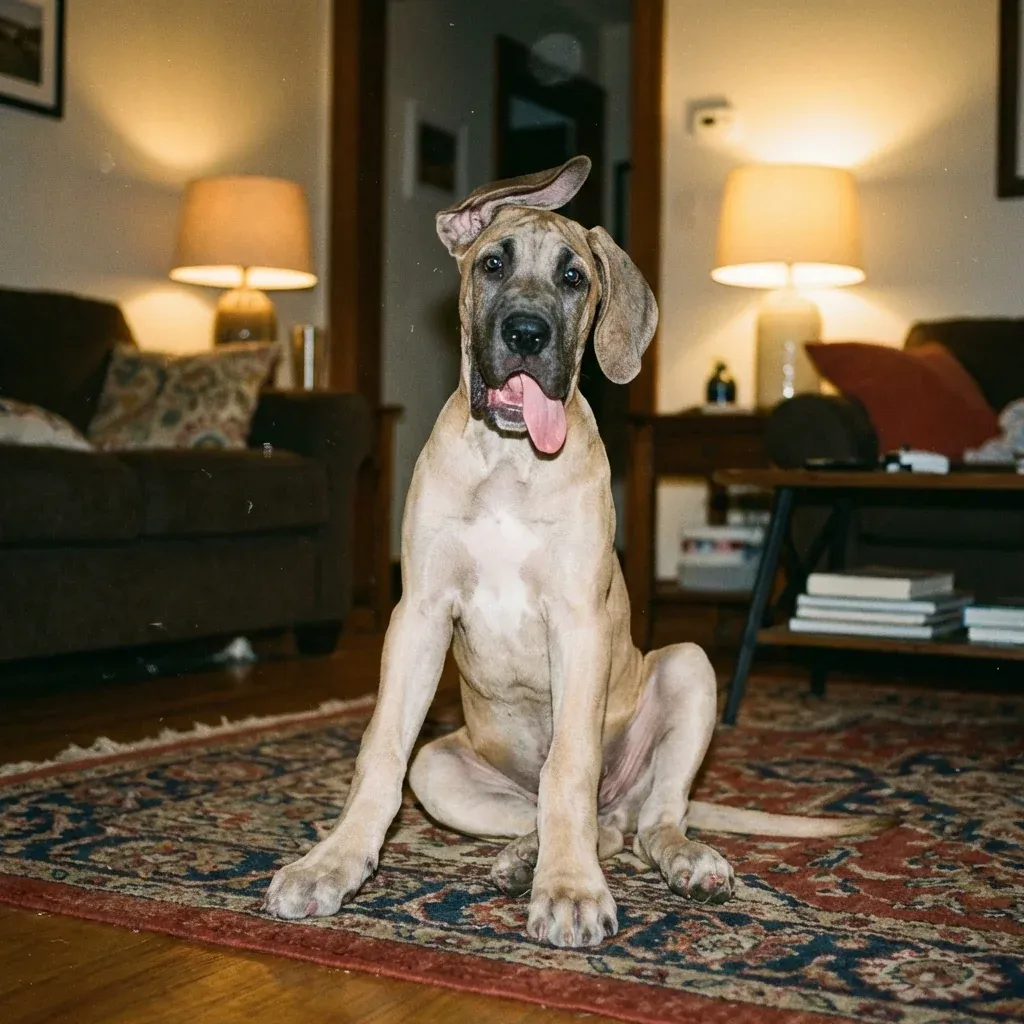 Great Dane puppy stage: confidence and handling skills are more important than intense exercise.
If your young Dane already pulls with force, compare handling options in best harness for dogs that pull hard and best leashes for pulling dogs so training is safer and more consistent.
Great Dane Adult Stage: Daily Life and Routine
Adult Great Danes are often calmer than people expect, but “calm” does not mean inactive. They still need predictable physical and mental outlets to stay balanced.
A practical adult routine for many homes includes:
- 1 to 2 structured walks daily,
- short obedience refreshers,
- low-impact enrichment (sniffing, food puzzles, calm exploration),
- consistent rest periods on supportive bedding.
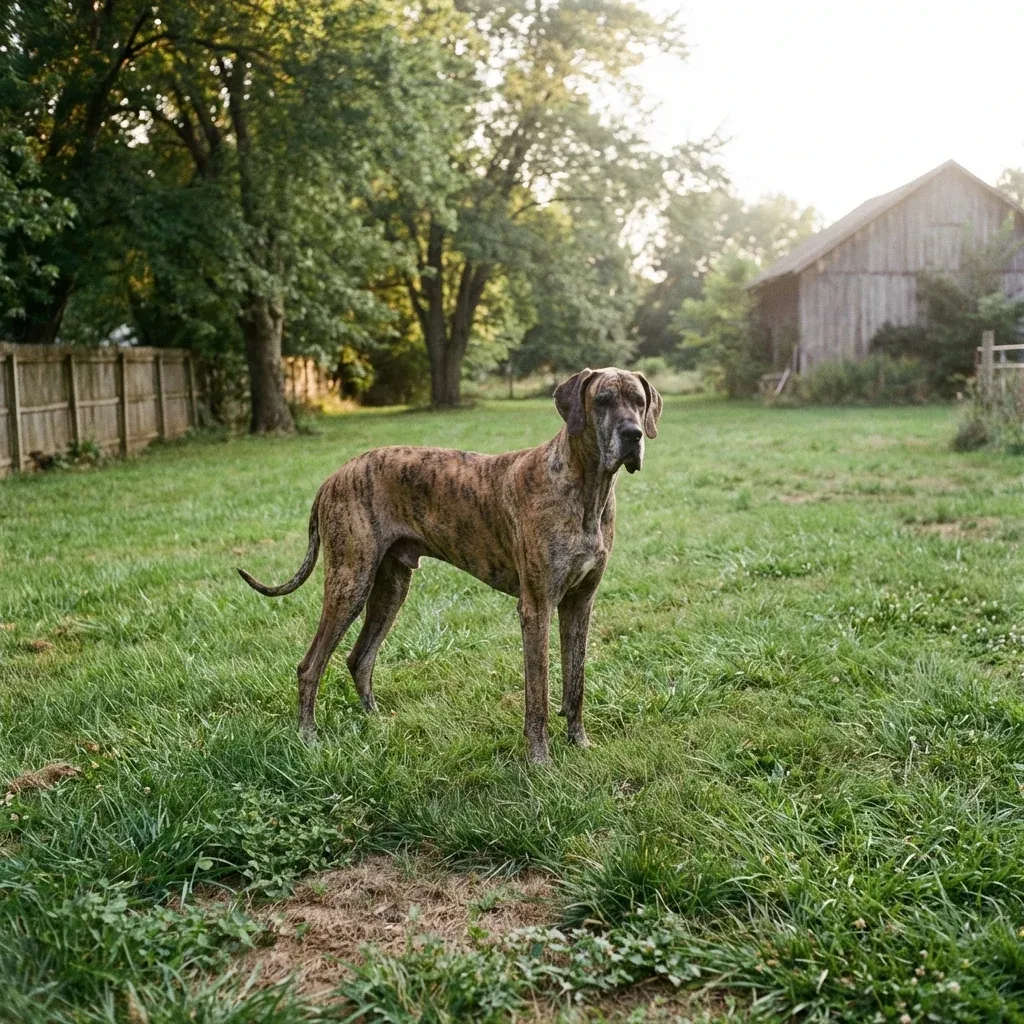 Adult Great Dane phase: steady routines and controlled activity protect both behavior and joints.
For equipment decisions, review dog harness vs collar so your handling setup matches your dog’s behavior and body structure.
Exercise and Training Requirements
Great dane care should include moderate daily exercise, structured training, and realistic expectations around giant-breed movement. Most Danes do well with consistency over intensity.
General training and movement principles:
- prioritize leash manners and impulse control,
- avoid repetitive high-impact jumping,
- use short sessions with clear cues,
- reward calm behavior around triggers,
- maintain household rules that every family member follows.
Because these dogs are large, training quality is a safety issue, not only a performance goal. A dog that understands simple daily rules is easier to handle at the vet, in public, and during busy household moments.
Common Health Considerations in Giant Breeds
Large and giant breeds have specific health management patterns. Great Danes are no exception, so preventive care planning is essential.
Common areas to monitor with your veterinarian:
- growth rate and body condition,
- joint and mobility comfort,
- digestive tolerance and feeding routine,
- skin and coat condition,
- age-appropriate activity load.
You may hear owners discuss severe conditions associated with giant breeds, including gastric emergencies and orthopedic stress. Those topics should always be reviewed with your vet in the context of your dog’s age, history, and line. This guide is educational and not a diagnosis.
Good prevention basics include regular checkups, stable routines, and avoiding unnecessary weight gain.
Is a Great Dane Right for You?
The Great Dane can be an excellent companion if your home can support giant-dog logistics every day.
It may be a strong fit if you:
- are comfortable handling a very large dog,
- can commit to consistent training,
- have enough space for safe movement,
- want a people-oriented companion with a generally calm home style.
It may be a poor fit if you:
- want minimal daily management,
- cannot safely control large-dog pulling,
- prefer highly rugged activity with frequent impact work,
- expect easy outcomes without structured routines.
When deciding, think beyond temperament alone. The real question is whether your routine, home setup, and training habits match the demands of a giant breed.
Recommended Gear for Great Danes
For great dane exercise needs and handling, you do not need a huge shopping list. You need correctly fitted essentials that support safe routine.
Core gear checklist:
- adjustable harness fitted to chest measurements,
- durable leash with reliable grip,
- backup collar with ID,
- long line for controlled distance work,
- visibility gear for low-light walks.
Before buying, measure first and compare categories instead of picking by marketing claims. The pages on best harness for large dogs and best leashes for pulling dogs can help you narrow choices based on control and fit.
FAQ
Are Great Danes good family dogs?
Great Danes can be very good family dogs when socialization, supervision, and household rules are consistent. Their size requires early training and safe handling around children.
How big does a Great Dane get?
Most adults are roughly 28 to 34 inches tall and often weigh around 100 to 175 pounds, depending on sex, genetics, and body condition.
How much daily exercise does a Great Dane need?
Most adult Danes do well with moderate daily structured activity, usually one or two controlled walks plus short training and enrichment sessions.
What harness works best for a Great Dane that pulls?
The best option is a well-fitted, adjustable harness chosen from chest measurements and paired with training. Start with comparisons at best harness for dogs that pull hard and best harness for large dogs.
Quick Answer
Use these two links first: one best-overall choice and one sizing workflow.