
The Best Harnesses for Puppies: How to Choose Without Overspending
Affiliate Disclosure: Some links in this post are Amazon affiliate links. We may earn a small commission at no extra cost to you if you purchase through them.
- Mini/toy puppies → Gooby Escape Free Easy Fit → check size and price on Amazon 🛒
- Fast growth stage → rabbitgoo Adjustable → check size and price on Amazon 🛒
- Large-breed transition → Ruffwear Hi & Light → check size and price on Amazon 🛒
Bringing a puppy home means rapid change. Their body shape evolves almost week by week. A harness that fits today may fail very soon.
That is why puppy harness buying is not about brand prestige first. It is about safe fit, low weight, and usable adjustment range.
If you are also building loose-leash habits, pair this with our how to teach a dog not to pull guide. Good gear plus basic routine beats expensive gear alone.
What a puppy harness must do
A puppy is not just a smaller adult dog. Movement is less stable, reactions are faster, and growth is constant.
A practical puppy harness should provide:
- Wide adjustability through growth phases.
- Low bulk/weight to avoid awkward gait changes.
- Easy on/off routine so you can use it consistently.
If one of these fails, most owners either misuse the harness or stop using it.
Common mistake: buying one size up “to make it last”
It sounds logical. In real life, oversized puppy harnesses often rotate and chafe. They also increase backward-slip risk in insecure pups.
Better strategy:
- Buy with reasonable growth room, not huge slack.
- Re-check fit weekly in rapid growth periods.
- Accept that one size transition is normal.
That approach saves money and avoids fit-related setbacks.
Quick Comparison: Puppy Harness Options
| Option | Best for | Chest girth range | Recommended weight | Adjustment level | Attachment type | Estimated price |
|---|---|---|---|---|---|---|
| rabbitgoo Adjustable | Fast-growing puppies | 12-34 in (size dependent) | 7-77 lb approx. | High | Front + back | $20-$35 |
| Gooby Escape Free Easy Fit | Mini/toy puppies and head-shy dogs | 11-23 in (size dependent) | 3-22 lb approx. | Medium | Step-in top closure | $18-$30 |
| Ruffwear Hi & Light | Large-breed transition stage | 17-42 in (size dependent) | 18-99 lb approx. | Medium-High | Main back point + secondary loop | $45-$65 |
Ranges are orientation-only. Always verify each brand’s official chart before ordering.
Check current size and stock to avoid returns.
View rabbitgoo on Amazon 🛒
1) rabbitgoo Adjustable: best for growth flexibility
If you want one harness to cover more growth weeks, this is often the practical winner. Its biggest strength is multi-point adjustment at neck and chest.
Clear advantages:
- Better adaptation to changing puppy proportions.
- Easier fine tuning without loose “floating” fit.
- Front ring available for early leash skills.
Best fit scenarios:
- Medium to large puppies in rapid growth windows.
- Owners walking daily who need stable fit quality.
- Households that want to reduce frequent re-buy cycles.
Honest limitation:
For very tiny puppies, hardware can feel a bit heavy. Gooby can be more comfortable at toy scale.
🔗 View rabbitgoo Adjustable on Amazon 🛒
Check current size and availability.
2) Gooby Escape Free Easy Fit: easiest start for tiny pups
At toy size, every ounce matters. This step-in design is simple to put on and usually easier for puppies that dislike over-head handling.
Clear advantages:
- Very light feel for small bodies.
- Quick routine for squirmy puppies.
- Good first harness while confidence is still developing.
Best fit scenarios:
- Mini and toy breeds.
- Early adaptation stage with short practice walks.
- Puppies that resist head-through harness designs.
Honest limitation:
Adjustment range is narrower than rabbitgoo. Fast growers may outsize it sooner.
🔗 View Gooby Escape Free Easy Fit on Amazon 🛒
Check current size and availability.
3) Ruffwear Hi & Light: smart transition for big pups
When your puppy is entering adolescent size and strength, this model becomes more relevant. It is light for its class but built with better long-term materials.
Clear advantages:
- Technical fabric that dries quickly.
- Stronger structure for larger, more powerful young dogs.
- Can bridge puppy-to-young-adult phase for many breeds.
Best fit scenarios:
- Labs, Shepherds, and other large breeds in transition.
- Owners prioritizing durability and cleaner finish quality.
- Puppies that already outgrew basic starter harnesses.
Honest limitation:
Higher upfront cost. It usually pays off most when growth pace has slowed a bit.
🔗 View Ruffwear Hi & Light on Amazon 🛒
Check current size and availability.
3-minute home fit protocol
Before your first longer walk, run this quick setup:
- Fit when your puppy is calm.
- Apply two-finger snug rule.
- Walk indoors for 2-3 minutes.
- Check for rotation, rubbing, or twisting.
- Re-adjust and repeat once.
This small routine prevents many “looked fine at home” problems.
Harness or collar for puppies?
For most puppies, harness wins in practice. Puppy movement is sudden and inconsistent. Harnesses distribute pressure and improve handling control.
For deeper context, see harness vs collar. If gear-up time is hard, read how to put harness on without stress.
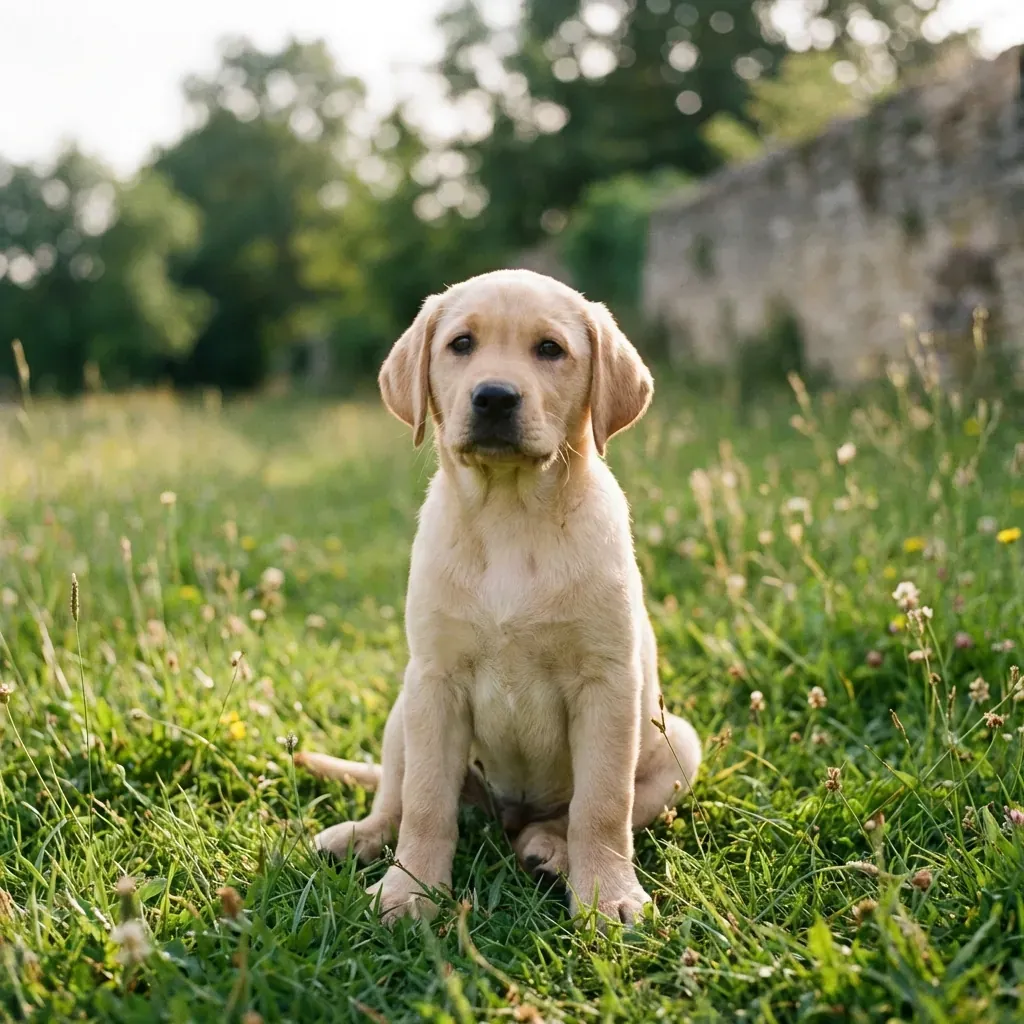 Getting a Labrador Puppy comfortable with harness handling early makes later walk training much easier.
How to predict next size without guessing
A practical rule: buy so your current measurement sits in the lower half of the range. That gives growth room without dangerous slack.
Simple example:
- If range is 16-22 in and your puppy is 16.5 in, that usually works.
- If your puppy is 21.5 in, you are likely too close to the upper limit.
If measuring is tricky, use this guide: how to measure your dog correctly. Correct measurement saves more money than any discount code.
Basic care to extend harness lifespan
Puppy life includes mud, chewing, and unpredictable pulls. To keep gear usable longer:
- Check buckles and stitching every 7-10 days.
- Wash according to label after heavy dirt exposure.
- Store dry, not damp in a bag or car trunk.
- Replace if you see cuts, deformed hardware, or unreliable closure.
No extreme routine needed. Just consistency.
Fast pre-check before checkout
- Does chest range fit now with sane growth room?
- Are there enough adjustment points?
- Is on/off routine manageable for your puppy?
- Is harness weight suitable for this body size?
- Does this match your current stage: tiny starter, fast growth, or transition?
Those five checks reduce expensive impulse buys.
7-day harness adaptation mini-plan
If your puppy resists harness time, use a short progression:
- Day 1-2: show harness indoors and reward calm interaction.
- Day 3-4: short on/off sessions without going outside.
- Day 5-6: very short walks in low-distraction areas.
- Day 7: normal short walk, rewarding calm moments.
This simple sequence often improves acceptance and lowers struggle during gear-up time. Keep sessions short and end on a win every single time for consistency.
Frequently asked questions
How often should I re-check size?
Weekly during fast growth phases. Every two weeks can be enough in slower phases.
Can I use this harness for anti-pull learning too?
Yes, with proper fit and consistent training habits. Technique still matters more than hardware alone.
What if my puppy chews the harness constantly?
Remove it indoors when not needed. Use structured chew alternatives and short, calm harness sessions.
When should I move to a more “adult” harness?
When size stabilizes and body control improves. That is usually when premium transition models make more sense.
If your puppy is mini/toy and needs ultra-light comfort, choose Gooby.
If growth is fast and you need broad adjustability, choose rabbitgoo.
If your large-breed puppy is entering transition stage, choose Ruffwear Hi & Light.
Quick Answer
Use these two links first: one best-overall choice and one sizing workflow.
Recommended for breeds
Related guides
- Best Harness for Dogs That Pull Hard (2026): A Hybrid Guide for Real-World Walks
- Best Escape-Proof Harness for Fearful Dogs (2026): 3 safer picks + fit guide
- Best Harness for Large Dogs (2026): 3 durable picks for real pulling control
- Best Harness for Small Dogs (2026): a practical guide to get fit and control right
- The Best Dog Harnesses for Hiking: What to Look For and What to Avoid