
Basset Hound Temperament, Size, and Care Guide (2026)
If you are researching basset hound temperament and care, you are probably trying to answer a practical question: is this low, long scent hound truly manageable in everyday life, or just charming in photos and short encounters.
The Basset Hound has a distinctive look, but owners stay for different reasons: steady companionship, a generally gentle home style, and a personality that is often funny, stubborn, and very nose-driven. That combination can be a great fit in the right household and a frustrating mismatch in the wrong one.
This guide covers what actually matters before you commit: temperament, size and structure, exercise needs, leash management, common care and health considerations, and essential gear. For a quick profile first, you can start with the Basset Hound breed page and return here for a deeper day-to-day breakdown.
What Is a Basset Hound?
The basset hound is a scent hound developed for tracking on the ground. Its body is low and heavy-boned, with long ears and a powerful nose that can stay focused on scent trails for extended periods. In practical terms, this breed was built to follow smell methodically, not to move fast in straight lines or respond instantly to every cue.
That history explains modern behavior in many homes:
- the dog can appear calm indoors but highly determined outside,
- scent often competes with handler attention,
- training usually improves with consistency, not speed,
- loose-leash skills matter early because scent pulling becomes habit quickly.
If you are comparing phrases like basset hound dog breed, basset hound temperament, or basset hound care, the core reality is the same: this is usually a friendly companion with independent hound instincts that need structure.
Origin and History
The breed traces back to French hound lines selected for scent work at a slower pace, suitable for tracking on foot. Over time, those traits produced the Basset Hound profile known today: short legs, long body, strong scent focus, and a methodical style.
Why this matters for modern owners:
- you are living with a dog shaped by tracking genetics,
- reliability off-leash is often harder than with handler-focused breeds,
- management tools and routines are not optional details,
- patience outperforms force in most training scenarios.
When owners expect immediate off-switch behavior outdoors, frustration follows. When they expect hound-style decision-making and build routines around it, outcomes are usually better.
Basset Hound Temperament and Personality
Most well-socialized Bassets are affectionate, people-oriented, and socially stable in home life. They often enjoy being near family and can be very tolerant companions. At the same time, many are selective about pace and motivation in training, which some families misread as “not listening.”
A more accurate interpretation is this: Bassets often evaluate context before responding, especially with competing scent cues. Consistent structure is key.
Common temperament patterns:
- generally gentle household behavior,
- strong scent-driven curiosity outside,
- independent streak during training,
- vocalization in some individuals (baying/howling),
- tendency to gain weight if activity and feeding are not managed.
Family life and children
Basset Hounds are often considered good family dogs because of their steady nature and tolerance in day-to-day interaction. With children, the best results come from calm, supervised habits rather than assuming temperament alone solves everything.
Practical home rules:
- supervise interactions with younger children,
- teach gentle handling and no climbing on the dog,
- reward calm greetings instead of jumping or crowding,
- protect rest time so the dog has predictable downtime.
In many households, this breed does well when routines are calm and predictable.
Other dogs and socialization
Many Bassets live successfully with other dogs, especially with early exposure and controlled introductions. Socialization should focus on neutrality and confidence, not constant high-arousal play.
Helpful socialization practices:
- choose stable play partners,
- keep sessions short and positive,
- reinforce check-ins with the handler,
- avoid crowded environments if your dog becomes overstimulated.
Because scent can override attention, leash manners are important before giving more freedom in stimulating areas.
Size, Weight, and Body Structure
The basset hound size question is central to care planning. Although short in height, Bassets are sturdy and heavier than many people expect.
Typical adult ranges:
- height: often around 11 to 15 inches at the shoulder,
- weight: commonly about 40 to 65 pounds,
- structure: long body, short legs, deep chest, substantial bone.
This build affects everyday management. A Basset is not a toy-sized dog, and improper fit in harnesses or collars can reduce control and comfort.
Before buying gear, measure chest and neck properly instead of guessing by breed label. Use this step-by-step guide on how to measure your dog correctly to reduce sizing errors.
Basset Hound Puppy Stage: Early Priorities
Basset puppies can look relaxed, but early structure still matters. During this stage, build habits that prevent leash conflict, overexcitement, and frustration later.
Top priorities in the first year:
- loose-leash foundations from day one,
- short, repeatable training sessions with food rewards,
- controlled exposure to people, surfaces, and sounds,
- consistent sleep and feeding routines,
- prevention of pulling habits while body weight is still manageable.
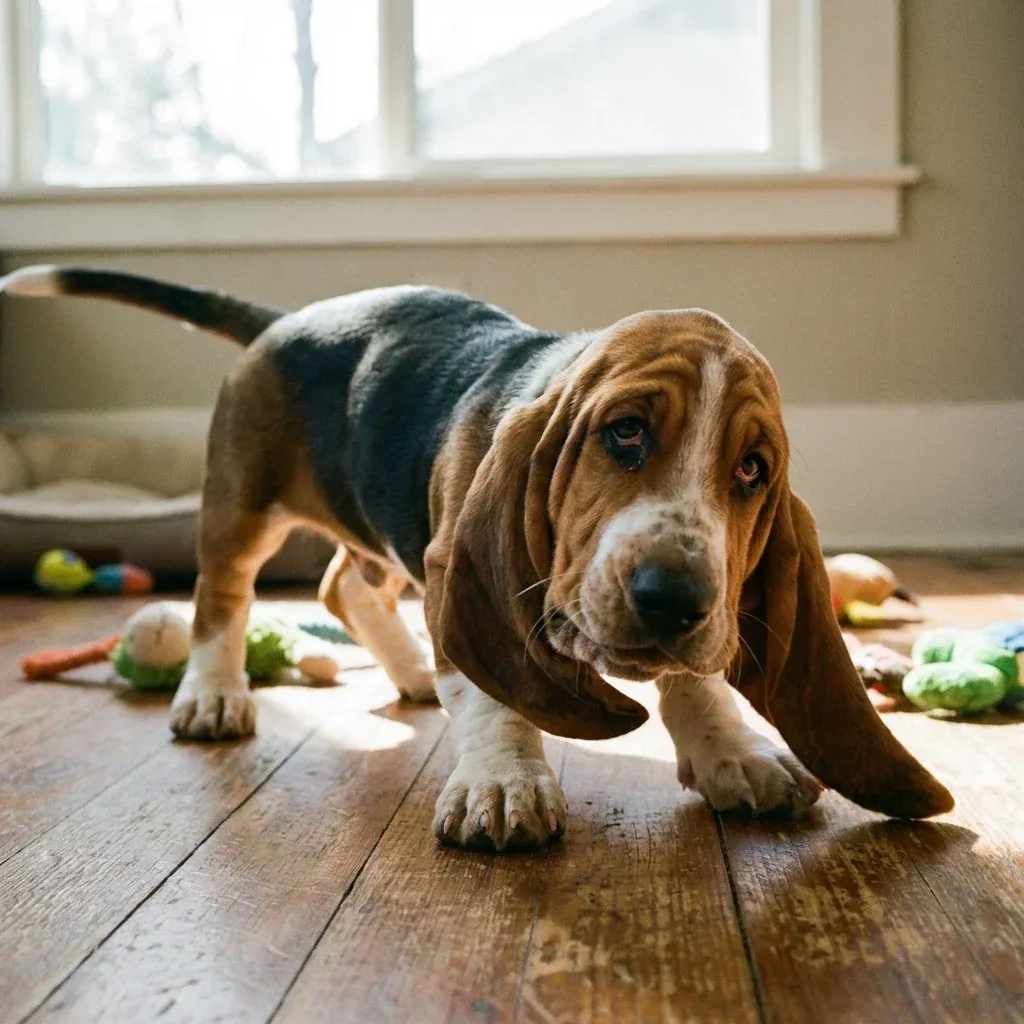 Basset puppy stage: confidence, leash habits, and calm routines are more important than intensity.
If your puppy already drags on scent, review how to teach dog not to pull on leash and support training with appropriate gear from best harness for small dogs.
Basset Hound Adult Stage: Daily Routine
Adult Bassets are often calm indoors, but they still need consistent physical and mental outlets. A short walk without sniffing opportunities may not satisfy this breed, while unlimited sniffing without structure can reinforce pulling.
A practical adult routine usually includes:
- one to two structured walks per day,
- planned sniff time with clear leash criteria,
- brief obedience refreshers for focus and impulse control,
- food enrichment and scent games at home.
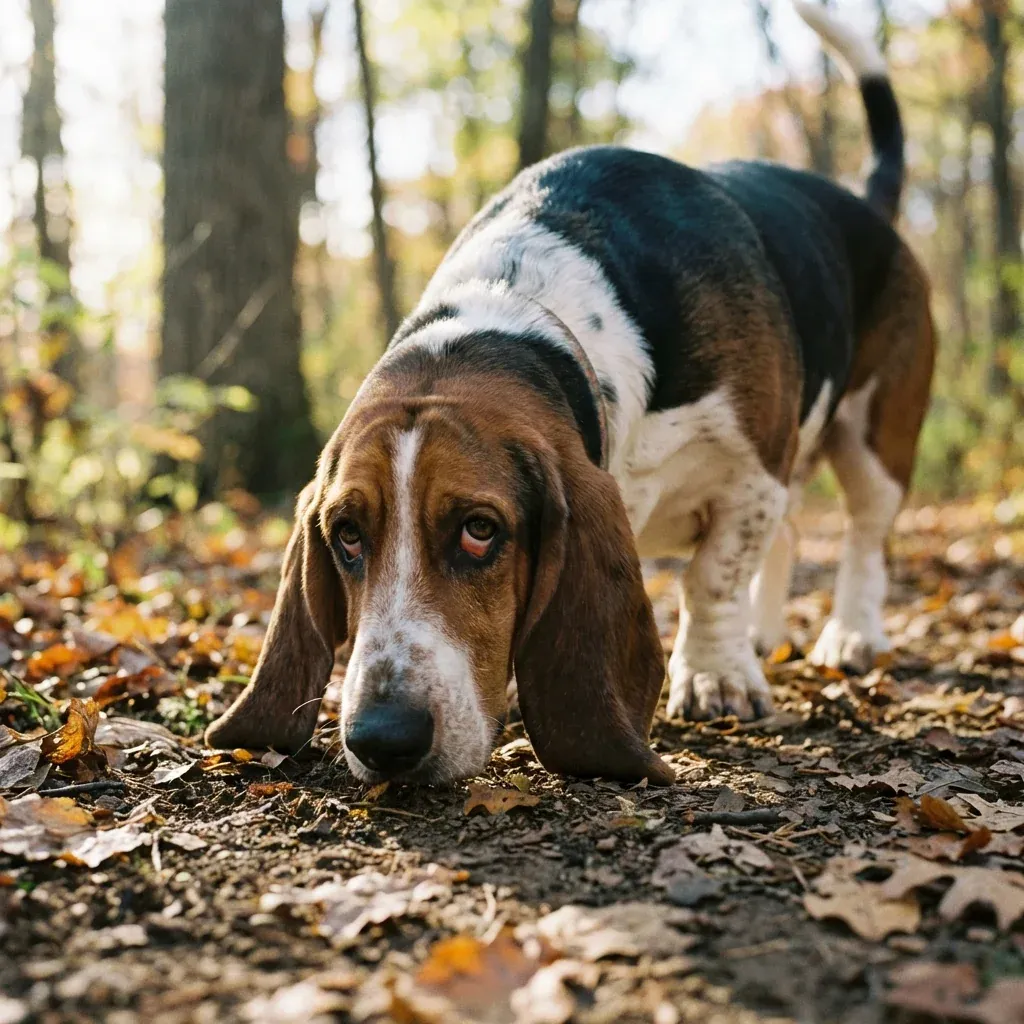 Adult Basset stage: balanced sniffing, structure, and consistency support easier handling.
For many owners, control improves when they choose handling tools intentionally. Compare pros and cons in dog harness vs collar before committing to one setup.
Exercise, Training, and Leash Management
When people ask about basset hound exercise needs, they usually need a realistic target, not an extreme routine. Most Bassets do best with moderate daily activity plus mental work.
General framework:
- regular walks with structured leash expectations,
- scent enrichment to satisfy breed instincts,
- short training blocks instead of long drills,
- consistent household rules shared by all handlers.
Do Bassets pull? They can, especially when scent tracking starts. That behavior is trainable, but progress is faster when management and training happen together.
If pulling is already a daily issue, compare best harness for dogs that pull hard and durable options from best leashes for pulling dogs while you train.
Common Health Considerations
Most Bassets can live comfortably with preventive care, but there are recurring points owners should monitor with their veterinarian. The breed’s structure and ears create specific maintenance needs.
Common areas to watch:
- body condition and weight management,
- skin and ear hygiene,
- mobility comfort over time,
- digestive tolerance and feeding consistency.
You may see frequent online discussion about back, joint, or ear concerns in hounds with similar structure. Use that information as a prompt for preventive vet conversations, not self-diagnosis. This guide is educational and does not replace professional medical advice.
Is a Basset Hound Right for You?
The Basset Hound can be an excellent companion when expectations match reality.
It may be a strong fit if you:
- prefer a generally calm, social dog at home,
- can handle steady training with a stubborn streak,
- accept scent-driven behavior outdoors,
- are willing to manage weight and routine proactively.
It may be a poor fit if you:
- want instant off-leash reliability,
- dislike repetitive training work,
- expect high athletic speed and responsiveness,
- cannot commit to daily leash structure.
If your goal is easy daily walks and predictable home behavior, the breed can work well with consistency. If your lifestyle needs fast obedience with minimal repetition, another profile may suit you better.
Recommended Gear for Basset Hounds
You do not need a long shopping list. You need core items that fit correctly and support training.
Core checklist:
- adjustable harness chosen from real chest measurements,
- durable leash with reliable grip,
- backup collar with ID tags,
- long line for controlled sniff work,
- visibility gear for low-light walks.
Start with fit and handling requirements, not marketing promises. For comparison pages, use best harness for small dogs, best harness for dogs that pull hard, and best leashes for pulling dogs.
FAQ
Are Basset Hounds good family dogs?
Many Basset Hounds are good family dogs when socialization, supervision, and calm routines are consistent. Their generally gentle style still benefits from clear boundaries.
How much exercise does a Basset Hound need?
Most adults do well with moderate daily exercise, usually one to two structured walks plus scent enrichment and short training sessions.
Do Basset Hounds pull on leash?
They can pull, especially when following scent. Consistent loose-leash training and properly fitted gear usually improve control over time.
What harness type works best for a Basset Hound?
A well-fitted adjustable harness chosen from chest measurements works best for most households, paired with training and a durable leash.
Quick Answer
Use these two links first: one best-overall choice and one sizing workflow.