American Leopard Hound Temperament, Size, and Care Guide (2026)
If you are researching american leopard hound temperament size and care, you are usually trying to answer one practical question: can this energetic hunting breed fit normal home life without constant friction.
The American Leopard Hound is athletic, vocal, and highly motivated by scent and movement. That can be a great match for active homes, but it can feel overwhelming without daily structure. Success with this breed depends more on routine, training clarity, and realistic expectations than on buying more gear.
This guide covers what matters before you commit: temperament patterns, size and physical traits, puppy-to-adult management, exercise and training demands, coat care, health priorities, and the walking setup that works best when drive is high. If you want a fast breed profile first, start with the American Leopard Hound breed page and return here for the detailed breakdown.
What Is the American Leopard Hound?
The american leopard hound dog is a United States hunting breed developed for tracking and treeing game in difficult terrain. Unlike some companion-first breeds, this dog was shaped for stamina, independent work, and fast decisions in the field.
In practical household terms, most owners should expect:
- medium-large, athletic body type,
- high environmental awareness,
- strong scent and chase interest,
- consistent need for movement and training,
- better outcomes with clear routines than with “go with the flow” handling.
The name sometimes leads people to assume this is mostly a visual “leopard coat” breed. Coat pattern is part of the identity, but behavior profile matters more for daily life: drive, focus, and recovery after activity are what determine whether the breed feels manageable.
Temperament and Personality
When people search american leopard hound temperament, they usually want a simple answer: easy or difficult? The useful answer is that this breed is often loyal, intelligent, and responsive with its own people, but not naturally low-maintenance.
American Leopard Hounds tend to read the environment constantly. Outdoors, many switch quickly from calm walking to intense interest in scent trails, wildlife movement, or distant sounds. Indoors, a well-exercised individual can be settled and affectionate.
Typical temperament patterns include:
- close bond with family handlers,
- alert response to noise and motion,
- independent problem-solving style,
- strong reward response when training is consistent,
- frustration behaviors if mental and physical outlets are missing.
Family compatibility
This breed can do very well in family homes when rules are clear and everyone handles the dog the same way. Inconsistent expectations usually create pulling, vocalization, and impulsive behavior.
Family habits that help:
- supervise dog-child interactions,
- teach children not to run and tease in small spaces,
- reinforce calm greetings at doors,
- schedule decompression after stimulating outings,
- keep feeding, rest, and walk timing predictable.
American Leopard Hounds are not automatically “too much” for family life. Problems usually come from management gaps, not from bad intent.
Behavior with other dogs
Many American Leopard Hounds can coexist with other dogs, especially when social exposure starts early and remains controlled. The main challenge is arousal control, not necessarily social aggression.
Practical social strategy:
- choose neutral introductions with stable dogs,
- avoid crowded parks if your dog escalates quickly,
- reward check-ins with the handler,
- interrupt fixation before it becomes pulling,
- follow a consistent leash skills plan.
If leash tension is already a daily issue, start with how to teach dog not to pull on leash before the habit becomes stronger.
Size, Weight, and Physical Traits
The american leopard hound size question matters because this is not a compact companion breed. Most adults are athletic, long-legged, and built for sustained movement.
Typical adult ranges:
- height: around 21 to 27 inches at the shoulder,
- weight: often about 45 to 70 pounds,
- frame: lean, muscular, deep chest,
- movement: fast acceleration with strong endurance.
Many individuals have a short, close coat, but some lines show different coat textures. Color and pattern can vary widely, including leopard-style markings, solid patches, and mixed tones.
Before buying equipment, measure your own dog instead of trusting breed labels. Use how to measure your dog correctly to reduce fit mistakes and improve control from day one.
Origin and Working Background
The American Leopard Hound developed in the southern United States as a practical hunting partner. Selection prioritized trail ability, stamina, voice, and adaptability across rough ground.
That working origin explains common modern behaviors:
- active scanning and scent tracking,
- confidence when navigating new terrain,
- persistence on interesting trails,
- preference for purpose-driven activity instead of passive lounging all day.
Owners who understand the breed’s working roots usually make better decisions around routine. The dog often succeeds when it has a job-like structure: planned walks, short training objectives, scent games, and clear rest windows.
Puppy and Adult Stage Priorities
Daily care changes a lot from puppyhood to adulthood. Planning each stage separately makes results more predictable.
Puppy stage
American Leopard Hound puppies are often curious, busy, and quick to test boundaries. Early months are the best time to build leash habits, handling tolerance, and calm recovery skills.
High-value puppy priorities:
- short leash sessions with clear goals,
- gentle handling for paws, ears, and mouth,
- controlled social exposure to surfaces and sounds,
- early impulse-control games,
- structured rest to prevent overtired behavior.
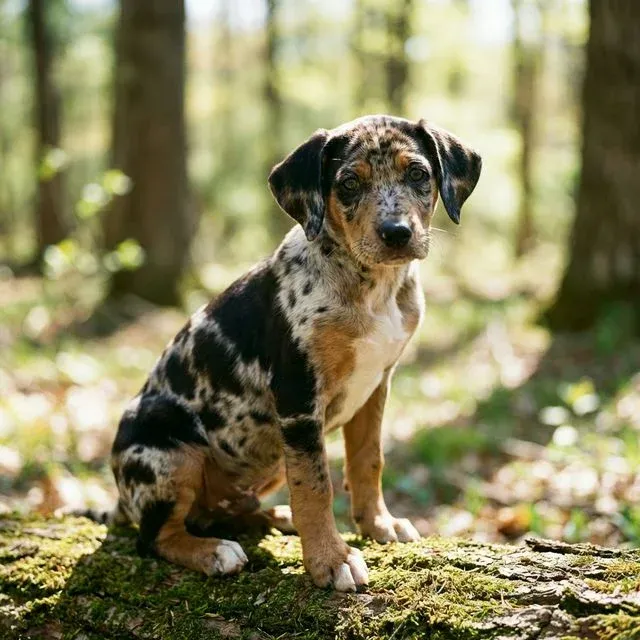 Puppy stage: early leash and handling routines prevent harder control problems later.
Adult stage
Adults usually become more emotionally stable, but physical capability and drive stay high. Mature dogs still need routine movement, clear criteria, and consistent handling.
Practical adult routine in many homes:
- one or two structured walks daily,
- sniff-focused decompression blocks,
- short obedience refreshers,
- field-style games that use nose and recall,
- recovery time away from constant stimulation.
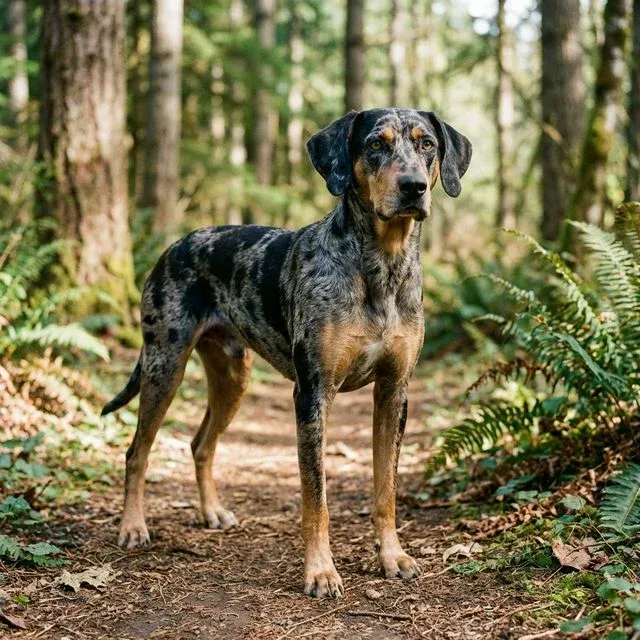 Adult stage: consistency in training and decompression matters more than random intensity.
Exercise and Training Needs
Most American Leopard Hounds need significant daily outlets. For many dogs, that means a combination of controlled walking, scent work, and focused training instead of one long unstructured outing.
A useful baseline for many adult dogs includes:
- structured physical activity every day,
- mental tasks that use scent and problem solving,
- repeated loose-leash practice,
- impulse-control drills near moving triggers,
- clear household rules with no mixed signals.
Training works best when sessions are short and frequent. Long, inconsistent sessions often create frustration in both dog and handler.
For equipment support while you train, compare best harness for dogs that pull hard with best anti-pull dog harnesses and choose based on fit and handling behavior, not marketing claims.
Coat Care and Grooming
Coat maintenance is usually moderate compared with long-coated breeds, but grooming still matters for comfort and skin monitoring.
Core grooming routine:
- weekly brushing to remove loose hair,
- regular checks for burrs or debris after outdoor sessions,
- ear inspection, especially in humid climates,
- nail trimming and paw checks on schedule,
- bathing only as needed to avoid skin irritation.
Because many American Leopard Hounds are active in brush and dirt, post-walk checks are important. Small habits prevent bigger skin and coat problems.
Common Health Considerations
Most dogs do well with preventive care, stable body condition, and age-appropriate exercise. The American Leopard Hound is no exception.
Topics worth discussing with your veterinarian:
- joint comfort and mobility over time,
- ear care and inflammation prevention,
- skin response to climate and activity,
- digestive tolerance with training rewards,
- recovery quality after higher-output days.
Online breed lists can be useful for questions, but they should not replace veterinary evaluation. This guide is educational and does not provide diagnosis.
Best Walking Gear for American Leopard Hounds
You do not need a huge shopping list. You need a small, reliable setup with correct fit and consistent use.
Useful core setup:
- adjustable harness sized to chest measurement,
- durable leash with a secure, comfortable grip,
- backup collar with visible ID,
- long line for controlled distance work,
- visibility gear for low-light conditions.
If you are deciding between setups, review dog harness vs collar first. Then choose a control-oriented option if your dog surges or tracks heavily on leash.
Is This Breed Right for Your Lifestyle?
The American Leopard Hound can be an excellent fit for active people who value trainability, outdoor time, and daily structure.
It may fit well if you:
- can maintain regular exercise and training,
- enjoy scent games, trail walks, and purposeful sessions,
- want a loyal and engaged working-style companion,
- are comfortable handling a strong, driven dog.
It may be a poor fit if you:
- want a low-energy “walk around the block” dog,
- prefer minimal training repetition,
- cannot manage leash reactivity or pulling safely,
- have an unpredictable schedule with little routine.
If you are comparing similarly independent working temperaments, this profile can be useful next to the Akbash breed characteristics and temperament guide.
FAQ
Are American Leopard Hounds easy to train?
They are trainable and often smart problem-solvers, but they are not usually effortless for beginners. Most owners get better results with short, consistent sessions and clear daily structure.
How much exercise do they need daily?
Most adults need substantial daily activity that combines physical movement and mental work. Structured walks, scent games, and focused training are usually more effective than unplanned free time.
What harness type works best for this breed?
A well-fitted, adjustable harness with strong chest stability is usually the best starting point, especially for dogs that track hard or surge forward. Fit quality and training consistency matter more than brand names.
Quick Answer
Use these two links first: one best-overall choice and one sizing workflow.