Afghan Hound Temperament, Size, and Care Guide (2026)
If you are researching afghan hound temperament size and care, you are usually trying to answer one practical question: can this elegant sighthound actually fit your daily routine, not just your visual preference.
The Afghan Hound is striking, but daily life with this breed depends less on appearance and more on management. Coat work, recall limitations, prey drive, and leash control all influence whether the experience is rewarding or frustrating.
This guide explains what matters before you commit: personality patterns, body size and coat realities, exercise and training needs, common care priorities, and simple gear decisions for safer walks. If you want a quick breed snapshot first, start with the Afghan Hound breed page and then return here for the full lifestyle breakdown.
What Is an Afghan Hound?
The afghan hound dog is an ancient sighthound developed for speed, visual tracking, and endurance in difficult terrain. In modern homes, that history still appears in behavior: many Afghans are observant, independent, and selective about responding when distractions are high.
In practical terms, most households should expect:
- a graceful but athletic dog with sudden acceleration,
- an independent decision style compared with highly handler-focused breeds,
- moderate to high movement needs,
- very high coat-maintenance demands.
People sometimes assume an Afghan Hound is only a show-ring breed. That is incomplete. Many individuals can be excellent companions, but only when families understand that beauty and management load come together.
Afghan Hound Temperament and Personality
When people search for afghan hound temperament, they usually want a direct answer: easy or difficult? The most accurate answer is that Afghan Hounds are often affectionate with their own family, but less eager to obey instantly than many other companion breeds.
A well-managed Afghan can be stable and calm at home, then highly alert outdoors. This does not mean unstable temperament. It usually reflects normal sighthound behavior: fast response to moving stimuli and selective engagement.
Typical temperament patterns include:
- loyalty to familiar people,
- polite distance with strangers,
- sensitivity to rough handling,
- bursts of playful intensity,
- independent streak during training.
Family compatibility
Afghan Hounds can live well with families when household structure is clear. They are often gentle in calm homes, but they do not thrive in constant chaos.
Useful family rules:
- supervise interactions with small children,
- teach respectful handling and no rough grabbing of coat,
- prevent jumping and door rushing early,
- maintain predictable rest and walk routines.
The breed is not usually aggressive by default, but inconsistency creates friction fast. Calm repetition works better than emotional correction.
Behavior with other dogs
Many Afghan Hounds can coexist with other dogs if socialization is progressive and controlled. However, their chase style can be intense in motion-heavy settings.
Practical socialization approach:
- choose stable dogs and neutral meeting environments,
- avoid crowded high-arousal areas until leash skills are reliable,
- reinforce check-ins with the handler,
- interrupt overarousal early.
If your Afghan already pulls or surges on walks, start a step-by-step leash plan early before the pattern hardens.
Size, Weight, and Coat Traits
The afghan hound size question matters because this is a tall, athletic breed with notable stride length and reach.
Typical adult ranges:
- height: around 25 to 29 inches at the shoulder,
- weight: often about 50 to 70 pounds,
- structure: lean, deep chest, long limbs,
- movement: fast acceleration and agile directional changes.
Coat traits are equally important for planning afghan hound care:
- long, fine coat in many body zones,
- tangling risk without regular maintenance,
- debris pickup during outdoor sessions,
- seasonal variation in grooming load.
Before buying harnesses, always size by measurement, not breed label. Use how to measure your dog correctly to reduce fit errors.
Origin and History
The Afghan Hound traces back to old hunting dogs from Afghanistan and nearby regions, where speed and visual tracking were critical. These dogs were selected to chase game across rough terrain, often with limited direct handler cues in the moment.
That origin helps explain modern behavior:
- strong visual interest in movement,
- selective response when competing stimuli appear,
- athletic bursts rather than constant hyperactivity,
- independence that can look like stubbornness.
Owners who understand this historical profile usually build better expectations and fewer conflicts.
Afghan Hound Puppy and Adult Stages
Daily management changes with age. Planning puppy and adult routines separately makes results more predictable.
Puppy stage priorities
Afghan puppies often look soft and playful, but early structure is critical. Because the breed can become fast and strong quickly, leash foundations should start early.
Core puppy priorities:
- short leash sessions with clear criteria,
- handling practice for grooming and body checks,
- calm social exposure to people and surfaces,
- consistent rest windows to prevent overtired behavior,
- reward-based focus around movement triggers.
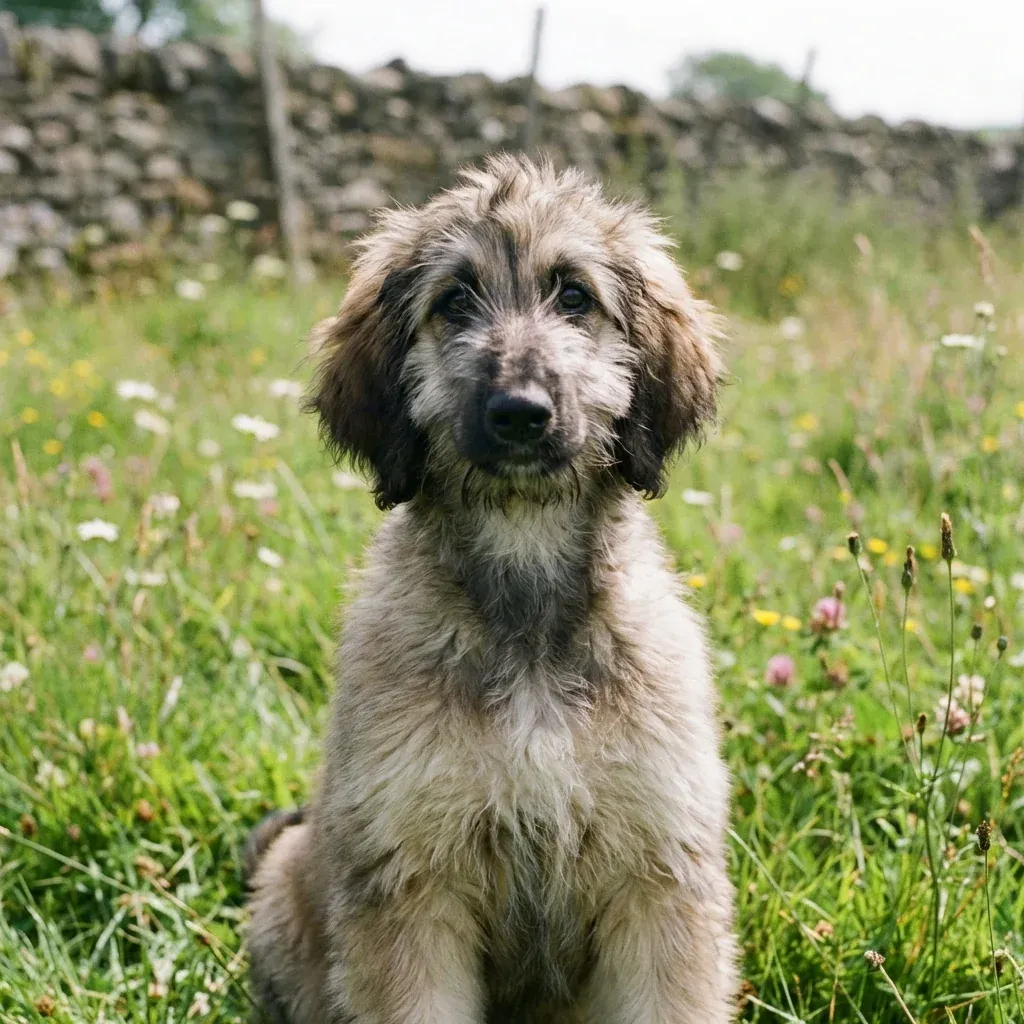 Afghan puppy stage: leash habits and grooming tolerance built early reduce stress later.
Adult stage routine
Adult Afghan Hounds are often more composed at home, but they still need deliberate structure for walks, coat care, and impulse control.
A practical adult routine in many homes includes:
- one to two structured walks daily,
- controlled sprint opportunities in safe enclosed spaces,
- short obedience refreshers,
- routine coat maintenance sessions,
- decompression time away from constant stimulation.
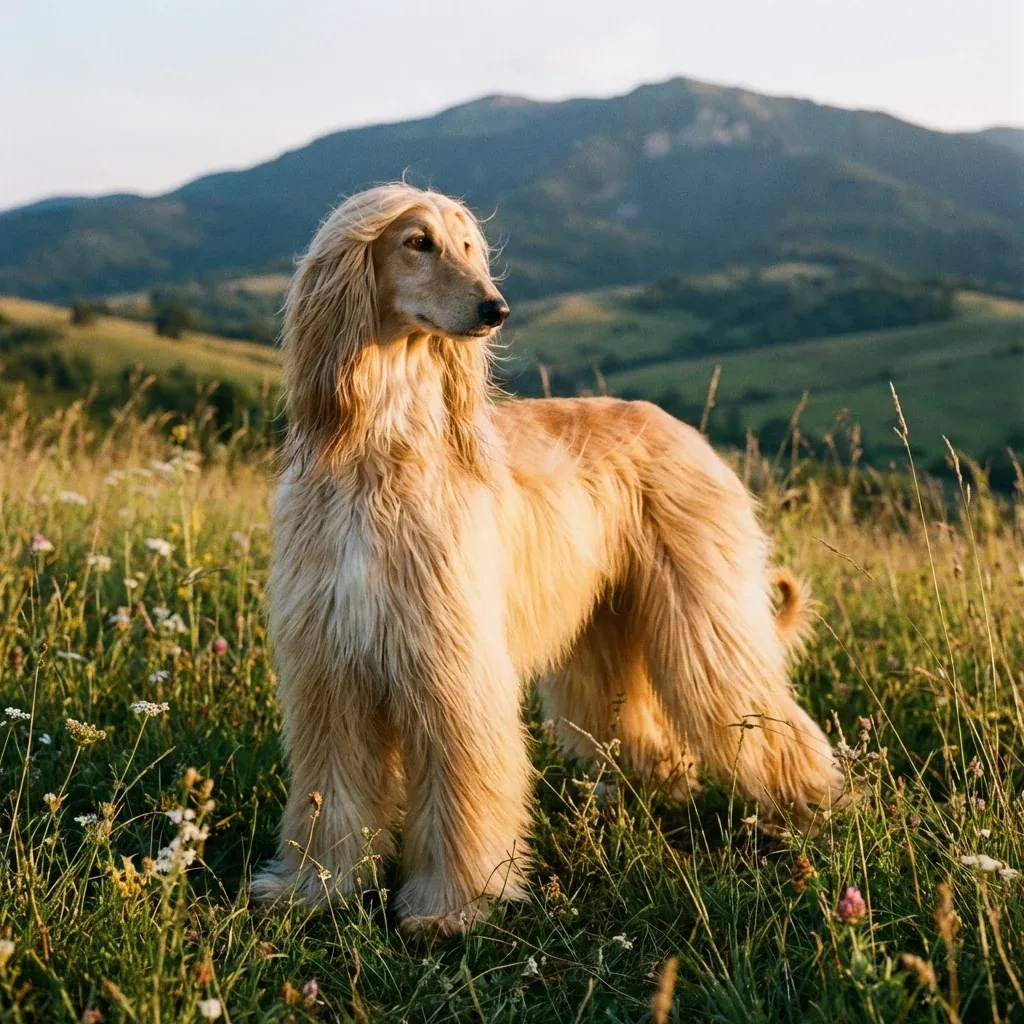 Adult Afghan phase: consistency in handling, grooming, and walk structure is more useful than intensity alone.
Exercise and Training Needs
Afghan Hounds usually need consistent physical outlets and clear training expectations. They are trainable, but most are not “instant-response” dogs in every context.
For afghan hound exercise planning, focus on structure:
- daily controlled walks,
- short training blocks repeated often,
- safe sprint work in fenced areas,
- impulse-control work around moving triggers,
- predictable household rules everyone follows.
Training quality matters more than duration. Sessions that are clear, brief, and repeated usually outperform long, inconsistent drills.
If leash pulling is already strong, compare handling options in best harness for dogs that pull hard and best leashes for pulling dogs while you build skills.
Grooming and Coat Maintenance
For many homes, grooming is the biggest difference between admiring an Afghan Hound and living comfortably with one.
A realistic grooming plan usually includes:
- frequent gentle brushing to prevent mats,
- regular bathing and drying workflow,
- coat checks after outdoor sessions,
- careful ear, paw, and feathering inspection,
- introducing grooming tools gradually in puppyhood.
Skipping coat work for long intervals often turns simple maintenance into stressful, time-consuming sessions. Building a predictable routine is easier than occasional “catch-up” grooming marathons.
Common Health Considerations
Most Afghan Hounds can do well with preventive care, but owners should keep regular veterinary follow-up and body-condition monitoring.
Common discussion points with your veterinarian:
- mobility comfort and joint monitoring,
- skin and coat condition,
- ear hygiene,
- digestive tolerance and stable feeding routine,
- age-appropriate exercise load.
You may see broad online claims about breed-specific disorders. Use those as prompts for vet conversations, not for self-diagnosis. This guide is educational and does not replace professional medical care.
Best Gear for Afghan Hounds
You do not need an oversized shopping list. You need a few items that fit correctly and match daily handling needs.
Core setup for many households:
- adjustable harness chosen from chest measurements,
- durable leash with reliable grip,
- backup collar with ID,
- long line for controlled distance practice,
- visibility gear for low-light walks.
For decision-making, compare control tradeoffs in dog harness vs collar and review fit-focused options in best harness for small dogs if your Afghan is on the lighter side of the breed range.
If your dog surges toward motion, prioritize a control-focused harness and leash setup and keep training sessions short, frequent, and consistent.
Is an Afghan Hound Right for You?
The Afghan Hound can be a strong fit when expectations are realistic and routines are consistent.
It may fit well if you:
- appreciate an independent but loyal dog,
- can sustain regular grooming work,
- can provide structured exercise and training,
- are ready to manage prey-drive moments safely.
It may be a poor fit if you:
- want minimal coat maintenance,
- expect immediate off-leash reliability,
- dislike repetitive training,
- cannot commit to steady walk structure.
The practical decision is less about admiration and more about logistics: time, routine, handling skill, and patience.
FAQ
Are Afghan Hounds easy to train?
Afghan Hounds are trainable, but many are independent thinkers. Most homes get better results with short, consistent sessions and clear routines rather than long drills.
How much exercise does an Afghan Hound need?
Most adults do best with daily structured walks, controlled opportunities to run in safe enclosed areas, and short mental-work sessions.
Do Afghan Hounds need special grooming?
Yes. Regular brushing, bathing, and coat checks are central to Afghan Hound care. Without routine grooming, mats and skin discomfort become more likely.
What harness works for Afghan Hounds?
A well-fitted adjustable harness selected from chest measurements is usually the best starting point. Pair fit quality with leash training for reliable control.
Quick Answer
Use these two links first: one best-overall choice and one sizing workflow.