Camargue
The Camargue horse is the symbol of wild freedom. Small, white, and hardy, it has survived for centuries in the marshes of southern France.
Start from the resources hub and jump back to the Horse Breeds index.
Advertisement
Summary
Known as the “Horse of the Sea,” the Camargue is one of the oldest breeds in the world. Famous for living in semi-wild herds in the wetlands of the Rhône delta, ridden by the “Gardians” (French cowboys) to manage the black bulls of the region.
Origin and History
They are believed to have lived in the Camargue region since prehistoric times (cave paintings resemble them). Their isolation in a hostile terrain of saltwater and mosquitoes has forged a breed of unmatched toughness.
Temperament and Personality
They are horses with strong but loyal character.
- Balanced: Nerves of steel, necessary to face brave bulls.
- Rustic: Survive where others would die.
- Bond: Once tamed, they form a very strong bond with their rider.
Physical Characteristics
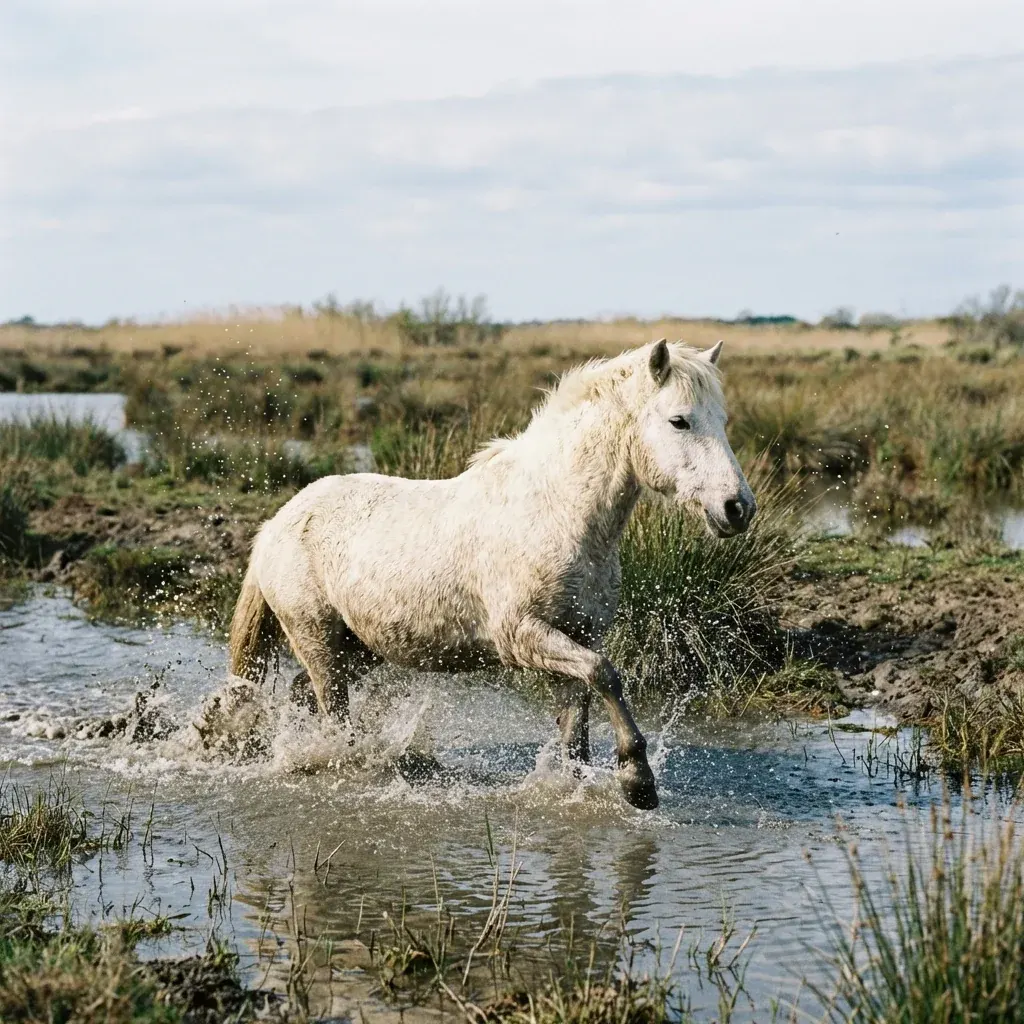
Always white (grey in final stage).
- Height: 13.1-14.3 hands. Technically ponies by height, but horses by structure.
- Head: Large, with expressive eyes and small ears.
- Body: Short and strong back, sturdy limbs adapted to moving in water and mud.
- Coat: Born black or brown and turn white with age.
Foal Stage
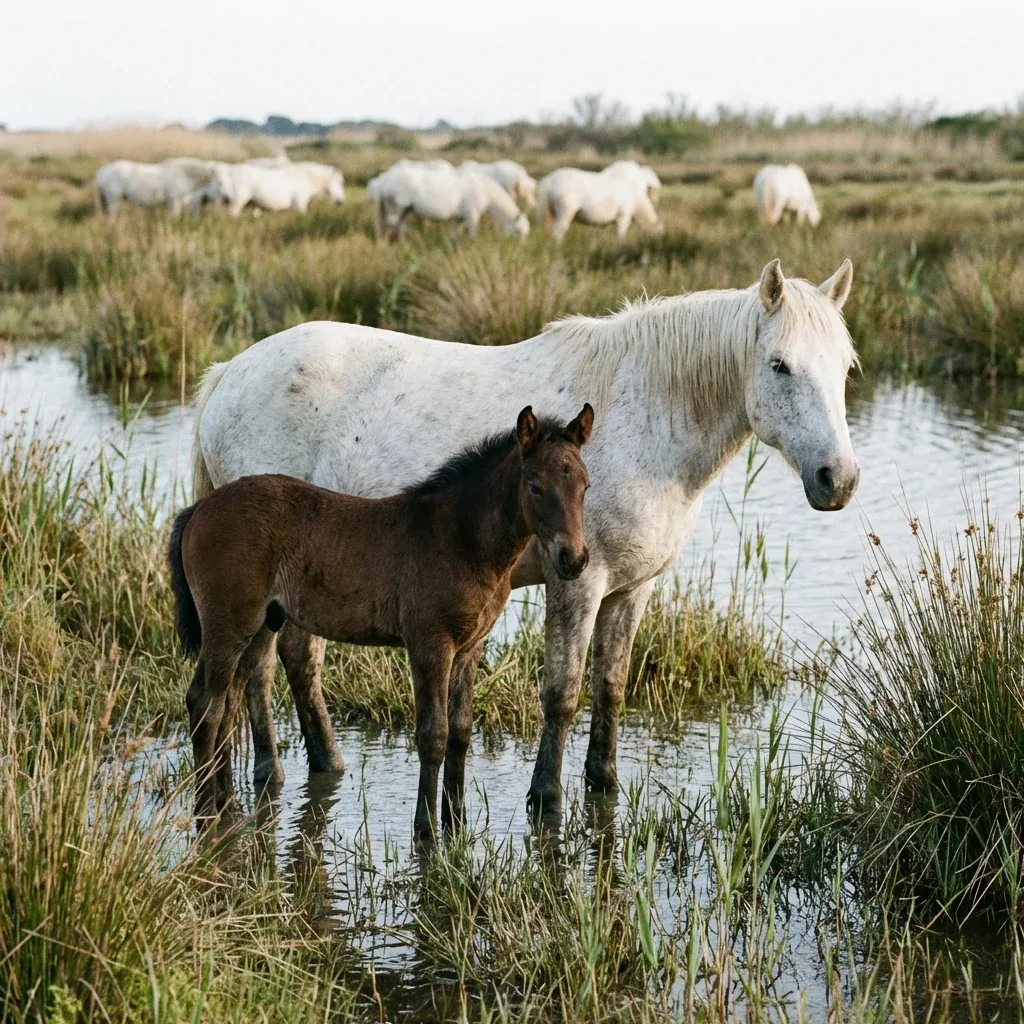
Foals are born dark, which is a beautiful contrast with the white mothers.
- Wild Life: Often born free in the herd (“manade”).
- Weaning: Early handling is crucial if they are to be ridden, as their instinct is very strong.
Adult Stage
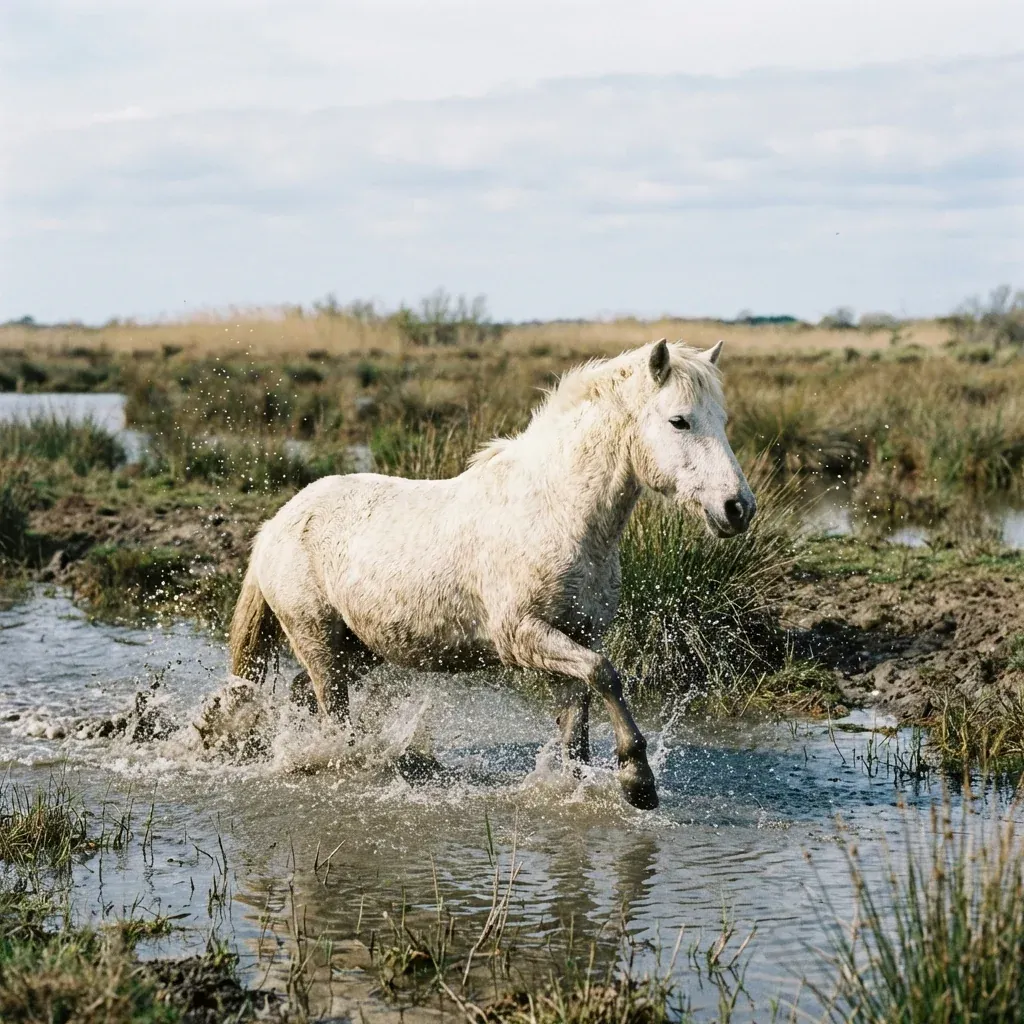
- Use: Traditionally for cattle work, but they are also excellent for equestrian tourism and trekking due to their sure-footedness on difficult terrain.
- Endurance: Their hooves are extremely hard, often requiring no shoes.
Health and Care
Probably one of the healthiest breeds in existence.
- Insect Resistance: Their skin tolerates bites better than other breeds.
- Feeding: Used to poor and saline pastures. Be careful about overfeeding with grain, they can suffer from laminitis easily.
Needs and Routines
- Freedom: Happier living outdoors. A closed stall depresses them.
- Water: They love water, will not hesitate to enter puddles or rivers.
Advertisement