Ardenner
The Ardenner is one of the oldest draft breeds in the world. A gentle giant with immense strength and a calm temperament.
Start from the resources hub and jump back to the Horse Breeds index.
Advertisement
Summary
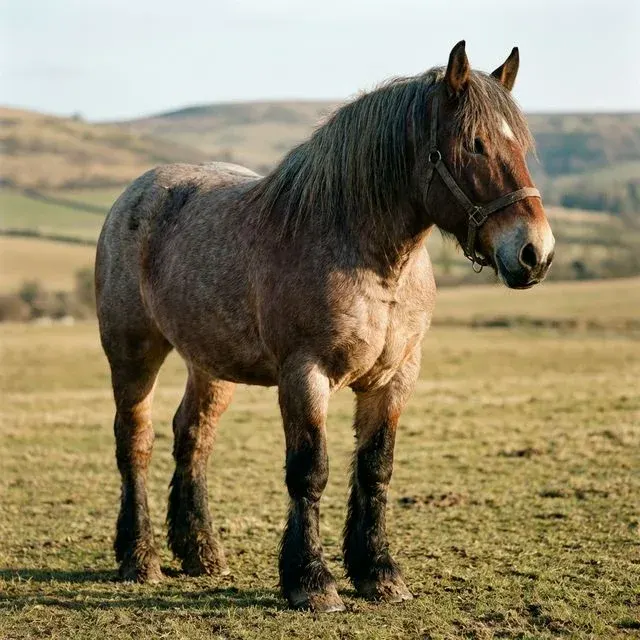
Originated in the forested Ardennes region, this heavy horse has served man since Roman times (Julius Caesar mentioned them in his chronicles). It is a compact mountain of muscle, known for its ability to work in difficult terrain where machinery cannot reach.
Origin and History
It is one of the oldest draft horse breeds. Its ancestors were heavy war horses in the Middle Ages. Later, they were used for agriculture and, notably, to pull heavy artillery during the Napoleonic Wars and World War I. Their history is tied to brute strength and endurance.
Temperament and Personality
The Ardenner is famous for its unflappable character.
- Gentle Giant: Despite its intimidating look, it is extremely docile and easy to handle.
- Willing: Has a tireless work ethic, ideal for logging (skidding).
- Brave: Not easily spooked, a trait inherited from its military use.
Physical Characteristics
It is a very compact and wide horse (“cob style”).
- Height: 15-16 hands. Not excessively tall, but very wide.
- Weight: Can easily exceed a ton.
- Legs: Very dense bone and feathered fetlocks, though less than the Shire or Clydesdale.
- Coat: Common colors include roan (bay, wine), chestnut, and iron grey.
Foal Stage
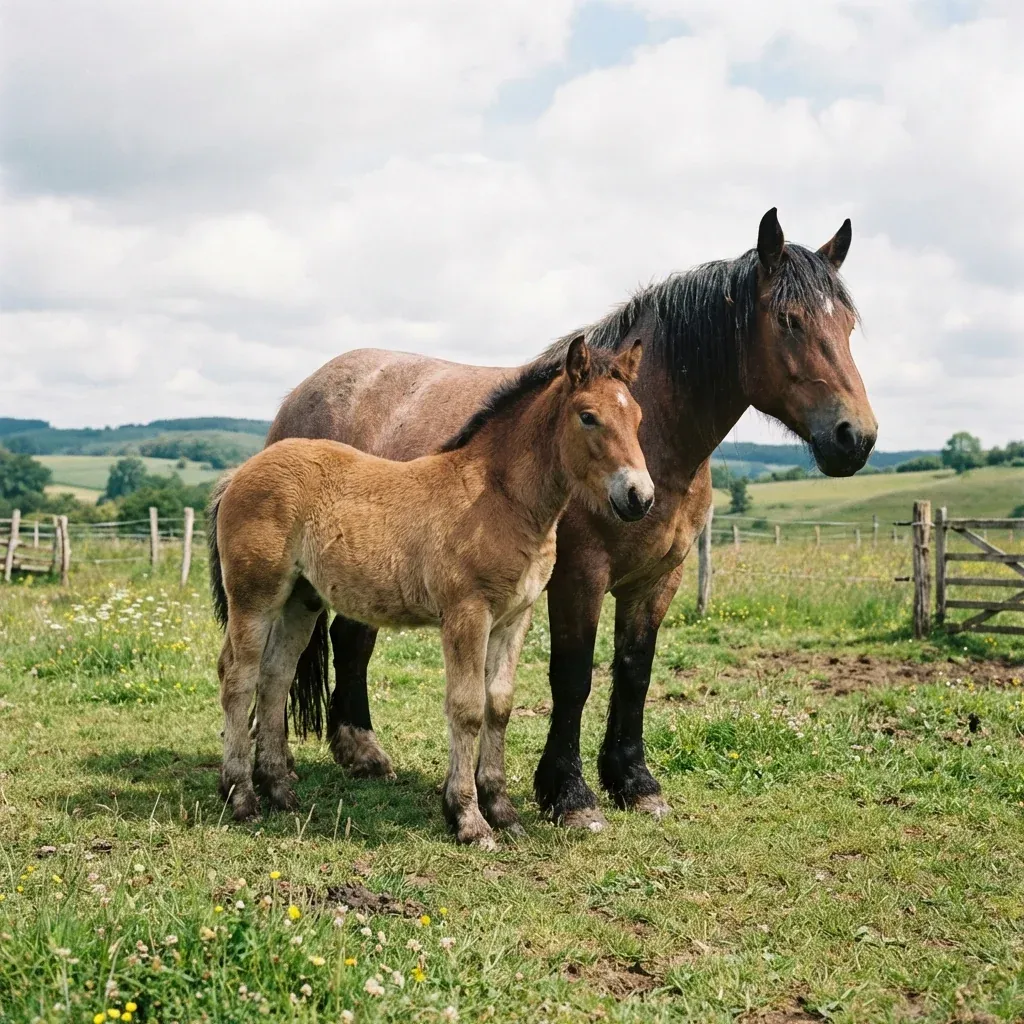
Foals are born with impressive bone structure.
- Growth: Rapid muscle mass growth. Feeding must be monitored to prevent joint issues from premature weight gain.
- Handling: Curious and trusting if treated with affection from the start.
Adult Stage
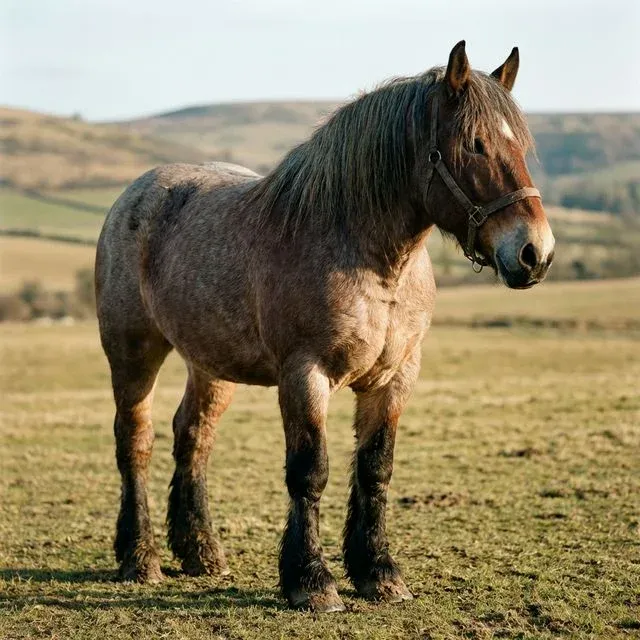
An adult Ardenner is a force of nature.
- Work: Nowadays widely used in eco-forestry to drag logs without damaging the forest floor.
- Hardiness: Can live outdoors year-round with minimal shelter thanks to their rustic constitution.
Health and Care
Very rustic breed.
- Skin: Watch out for scratches or issues in the fetlocks due to moisture and hair.
- Feeding: They are “easy keepers”, gaining weight just by looking at food. Risk of laminitis on rich pastures.
Needs and Routines
- Space: Need pasture, although they don’t require huge gallops, they need constant movement.
- Farrier: Their hooves are huge and require a farrier experienced with heavy breeds (or can go barefoot if terrain permits).
Advertisement