Siberian Husky
The Siberian Husky is a beautiful working dog known for its endurance, distinctive howl, and stunning blue eyes or heterochromia.
Start from the resources hub and jump back to the Dog Breeds index.
Advertisement
Overview
The Siberian Husky leaves no one indifferent. With a wolf-like appearance but friendly temperament, it is an athletic and independent breed. Born to run, it needs active owners who understand its primitive and pack-oriented nature.
Origin & History
Originally bred by the Chukchi people in northeastern Asia as endurance sled dogs. They were designed to travel long distances at moderate speeds, carrying light loads in sub-zero temperatures. Their worldwide fame came in 1925 with the “Serum Run” to Nome, Alaska, where they saved the town from a diphtheria epidemic.
Temperament & Personality
They are free spirits.
- Independence: They are not lap dogs nor do they live to please you like a Golden. They are partners, not servants.
- Dramatic: Known for their vocal “tantrums.” They howl, “talk,” and whine, but rarely bark.
- Escapists: They are the Houdinis of the canine world. They jump fences, dig tunnels, and open doors if bored.
Physical Characteristics
- Eyes: Can be blue, brown, one of each color (heterochromia), or even parti-colored.
- Coat: Very dense double coat that insulates them from cold… and heat (never shave a Husky!).
- Tail: Brush-like, which they use to cover their nose when sleeping in the snow.
Puppy Stage
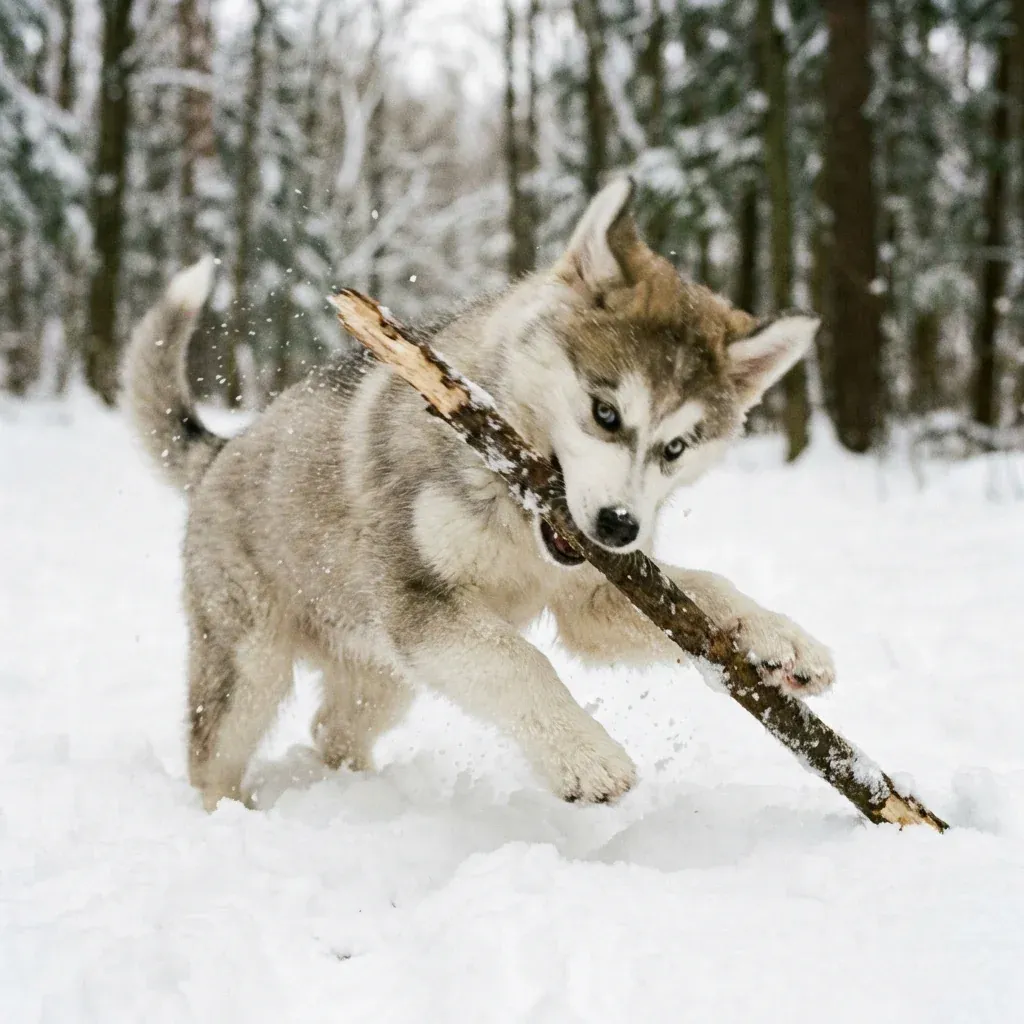
They look like teddy bears, but are whirlwinds of energy.
- Destructive: A bored Husky puppy can destroy a sofa in minutes. Mental and physical exercise is vital.
- Training: Must start on day one. They require firmness and consistency, as they will constantly test your limits.
Adult Stage
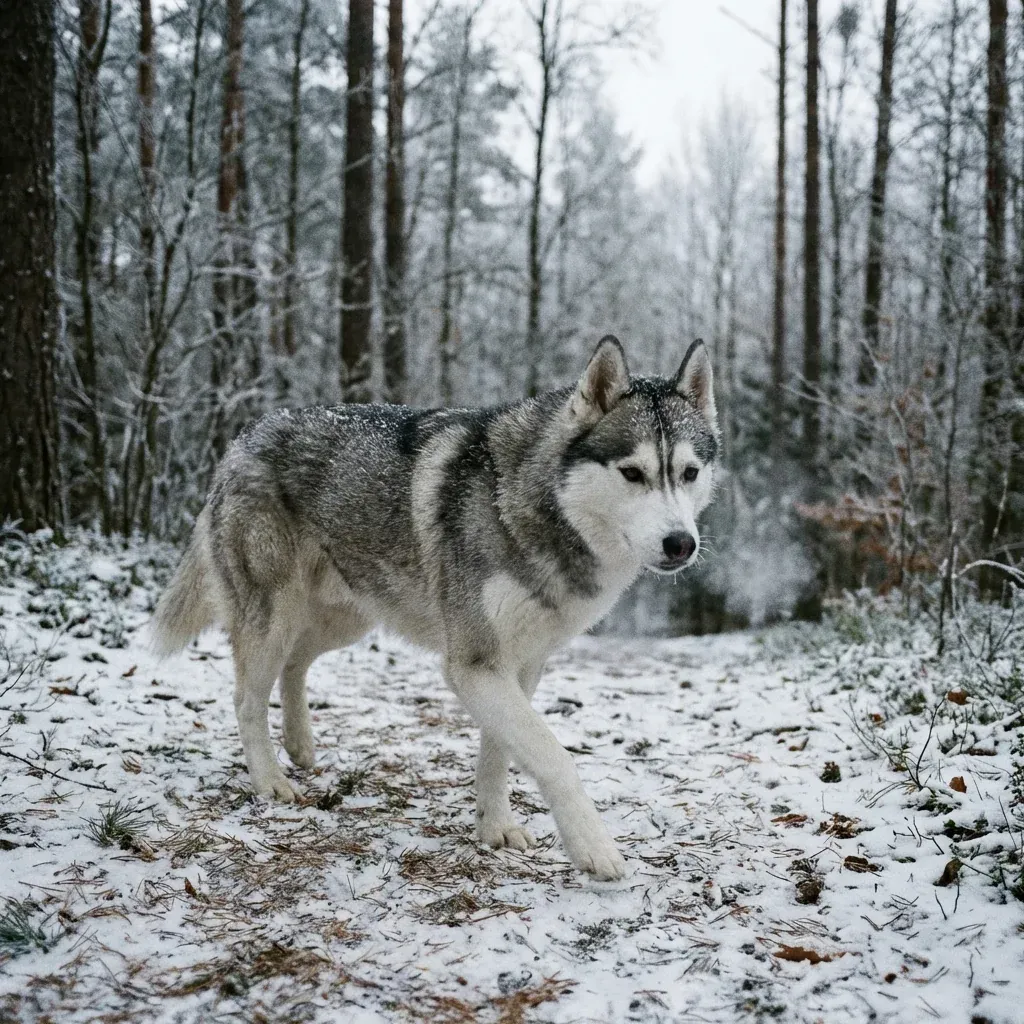
An adult Husky is a tireless athlete.
- Exercise: They need to run. Walking is usually not enough. Canicross, bikejoring, or long hikes are ideal.
- Prey Drive: They have a high prey drive. Be careful with cats, rabbits, or small dogs if they haven’t been raised together.
Health & Care
A very healthy breed, with few serious genetic problems.
- Eyes: Juvenile cataracts and progressive retinal atrophy.
- Heat: They are very sensitive to high temperatures. Avoid exercise during the hottest hours of summer.
Needs & Routines
- Brushing: Daily. During shedding season, prepare to remove bags of fur.
- Leash: It is NEVER recommended to walk them off-leash in unfenced areas. Their desire to run is stronger than their recall.
Advertisement
Related guides
Fast paths to harness, leash, training, and fitting guides.