English Foxhound
The English Foxhound is the quintessential pack dog. Athletic, friendly, and with inexhaustible stamina.
Start from the resources hub and jump back to the Dog Breeds index.
Advertisement
Summary
The English Foxhound is a natural born athlete. Bred to run miles chasing scents, it is a dog with overflowing energy and a very sociable character, accustomed to living in large packs. Rarely seen as a single pet, but can adapt if the owner is very active.
Origin and History
The breed was standardized in the United Kingdom in the 18th century for fox hunting on horseback. Its breeding has been meticulously maintained by the Masters of Foxhounds, with studbooks dating back over 200 years.
Temperament and Personality
- Sociable: Gets along well with other dogs (it’s their job!) and generally with people and horses.
- Vocal: Has a powerful and melodious bark (baying) used to communicate during the hunt.
- Nose to the ground: If it catches an interesting scent, it might turn a “deaf ear” to your calls.
Physical Characteristics
Powerful and clean-lined.
- Height: 23-27 inches.
- Weight: 65-75 lbs.
- Lifespan: 10-13 years.
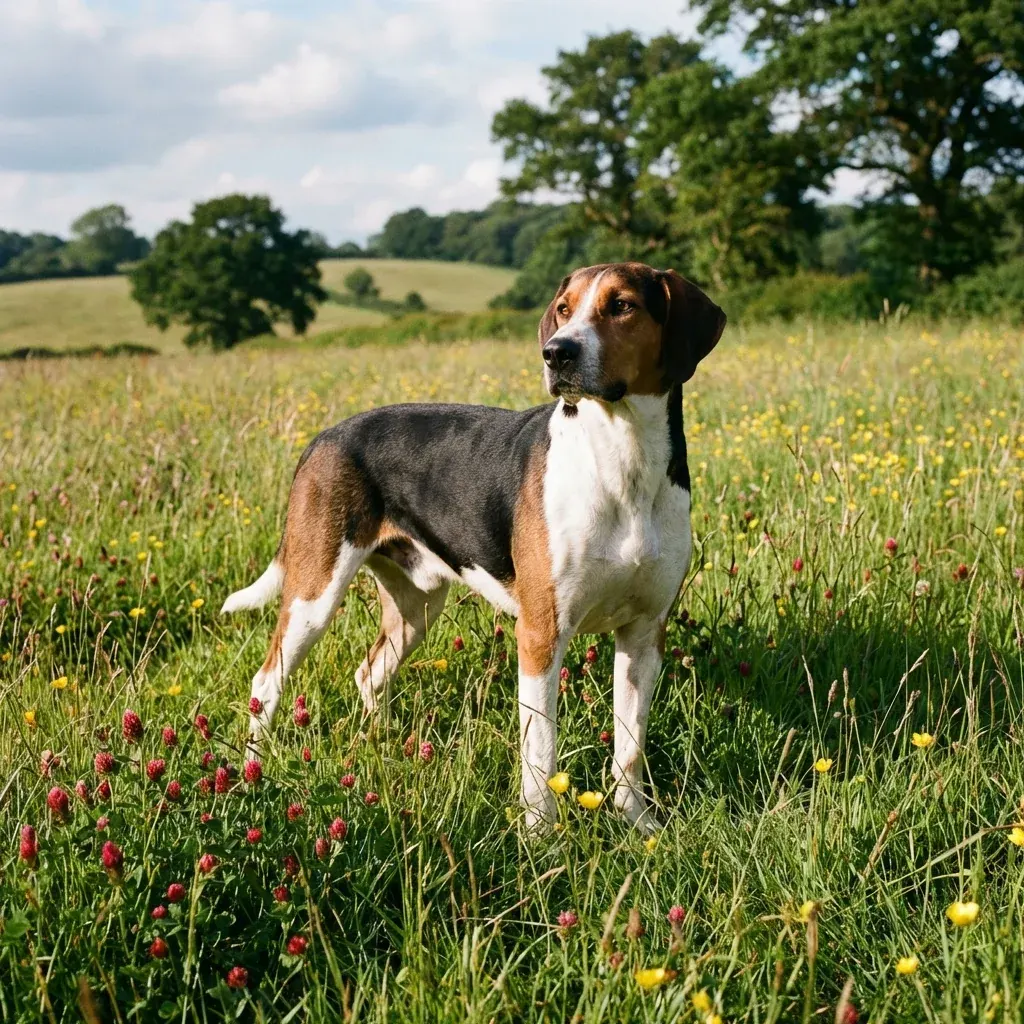
- Coat: Short, dense, and hard. Tricolor (black, white, and tan) is the most classic.
Puppy Stage
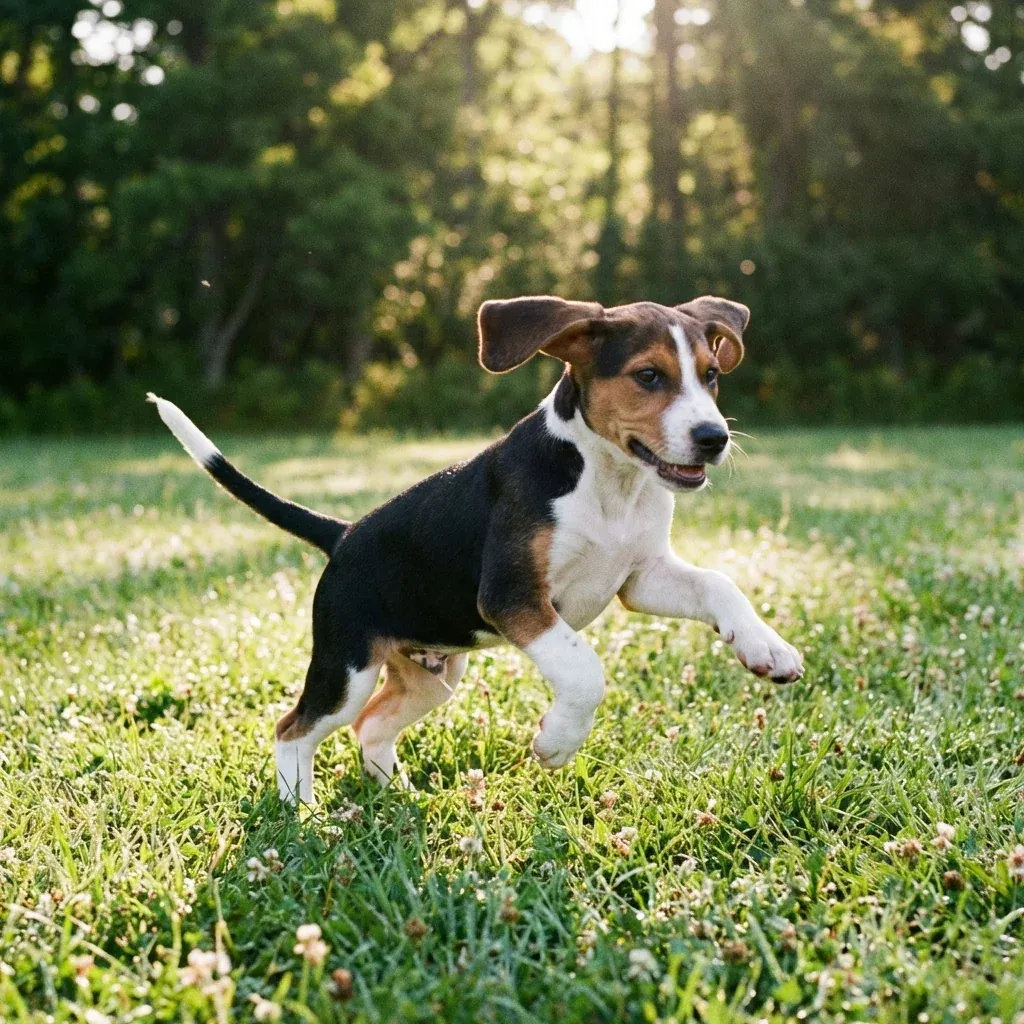
Puppies are playful and destructive if bored.
- Special Needs: Teach recall (“come here”) from a very young age, although it will never be infallible.
- Socialization: Very easy, they are naturally friendly.
Adult Stage
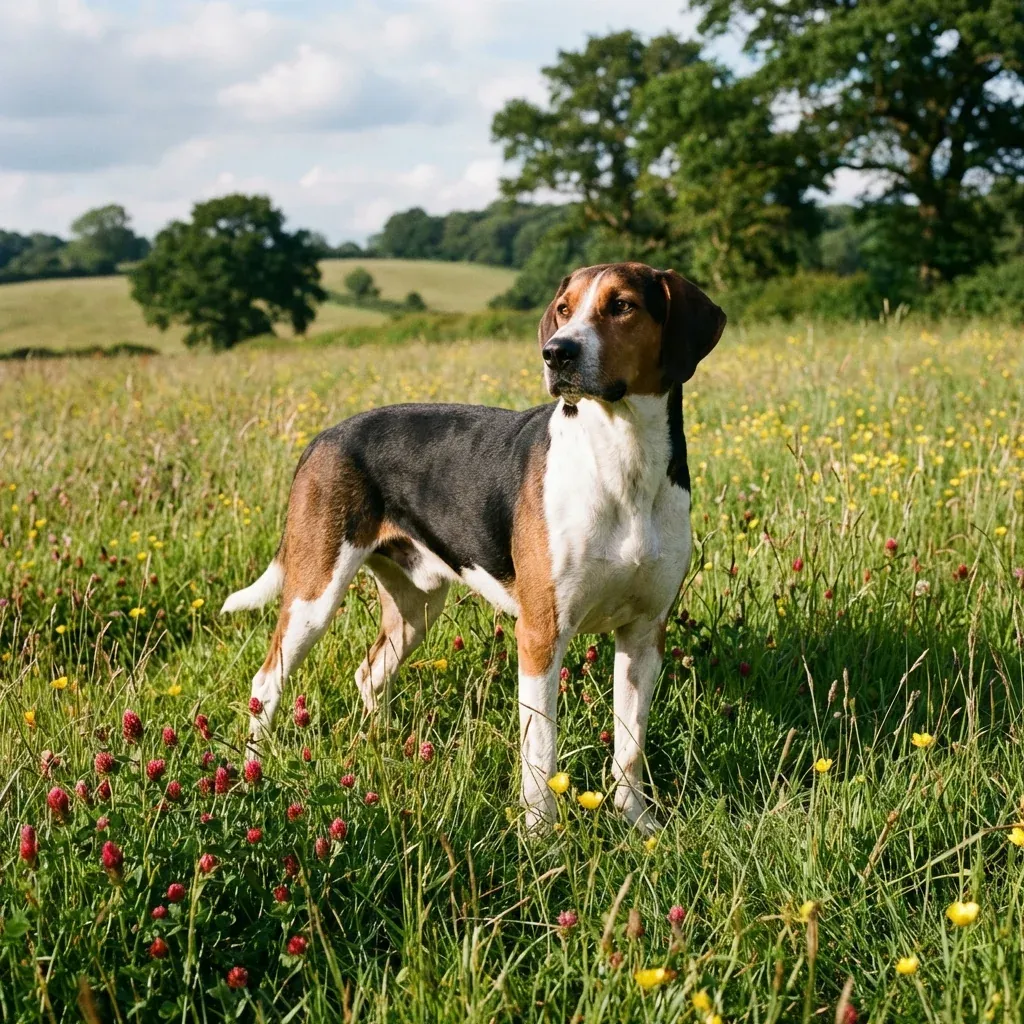
An adult Foxhound needs miles.
- Routines: Not suitable for sedentary life or small apartments without a yard.
- Living: Better with another dog companion. Solitude suits them very poorly.
Health and Care
Very healthy breed thanks to functional selection.
- Hip Dysplasia: Possible.
- Kidney Disease: Some lineages may have a predisposition.
- Ear Infections: Their drop ears require regular cleaning.
Needs and Routines
- Feeding: High energy.
- Grooming: Weekly brushing. Bath only if necessary (when they roll in something smelly, which they love!).
- Exercise: Extreme. Running, hiking, tracking.
Advertisement
Related guides
Fast paths to harness, leash, training, and fitting guides.