Australian Silky Terrier
The Australian Silky Terrier is a small but energetic companion dog. Elegant and lively, it combines the best of a lap dog with the alert spirit of a terrier.
Start from the resources hub and jump back to the Dog Breeds index.
Advertisement
Summary
Often confused with the Yorkshire Terrier, the Australian Silky Terrier is a distinct breed with its own personality. Larger and more robust than the Yorkie, it was bred to be both an elegant companion and a capable rodent hunter. It is an ideal city dog, alert yet adaptable.
Origin and History
Developed in Australia in the late 19th century, it comes from crossing imported Yorkshire Terriers with the local Australian Terrier. Breeders sought to improve the color and coat quality of the Australian Terrier while maintaining its robustness.
Temperament and Personality
It’s all terrier in a small package.
- Energy: Playful and active, loves to investigate.
- Alert: Excellent watch dog, will bark if something seems strange.
- Sociability: Generally friendly with people, but can be feisty with other dogs if not socialized.
Physical Characteristics
Elegant but solid.
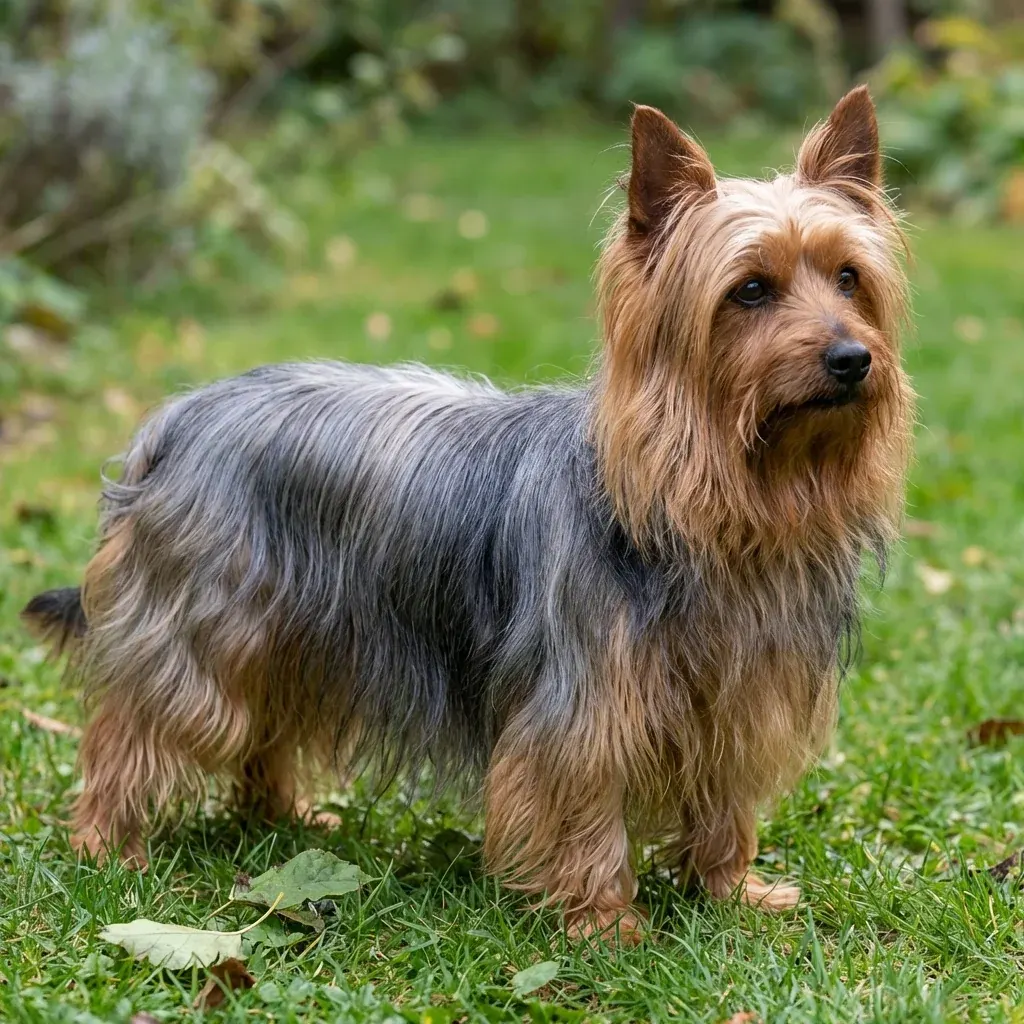
- Coat: Straight, fine, and glossy, with a silky texture. Blue and tan is the standard color.
- Body: Slightly longer than tall, with a level back.
- Ears: Erect and V-shaped, giving it an always-attentive expression.
Puppy Stage
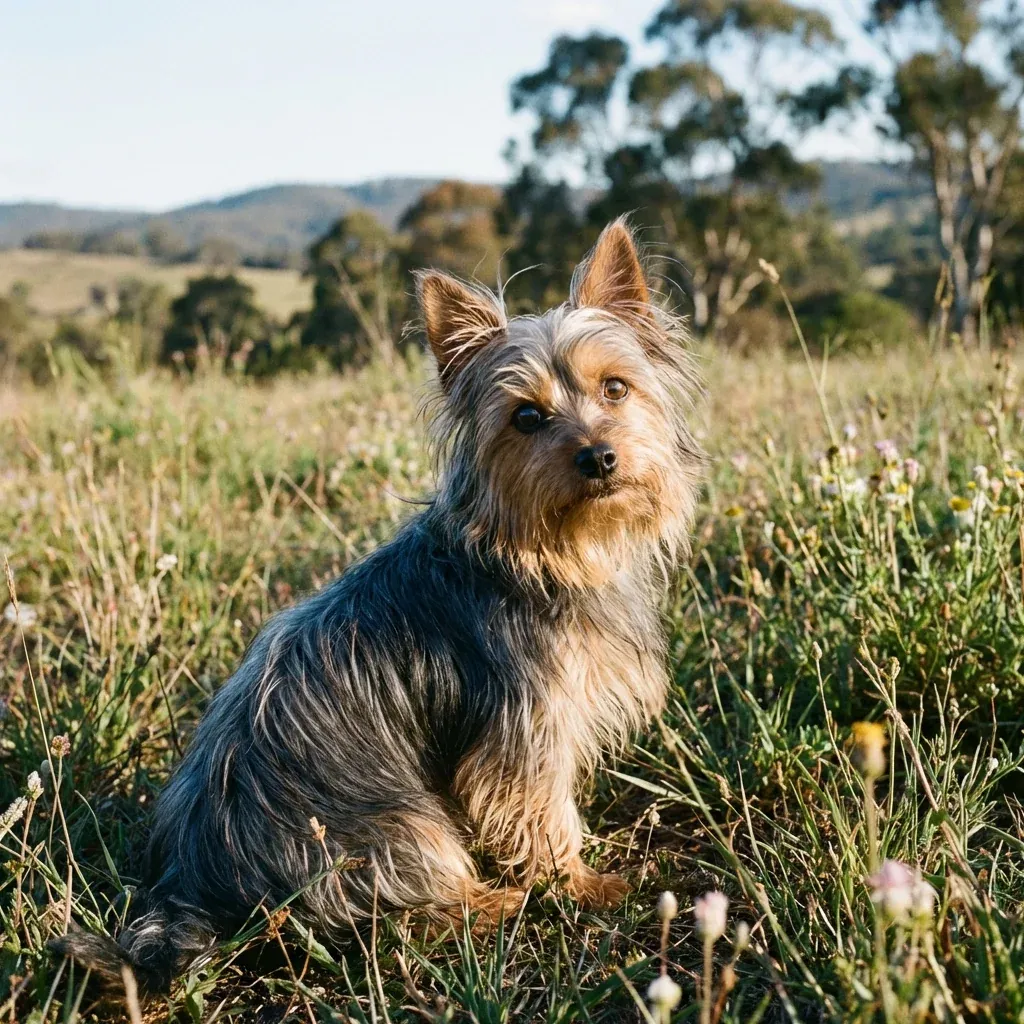
Small and curious.
- Care: Coat needs accustoming to brushing from a very young age.
- Training: Intelligent but can be stubborn; use positive reinforcement.
Adult Stage
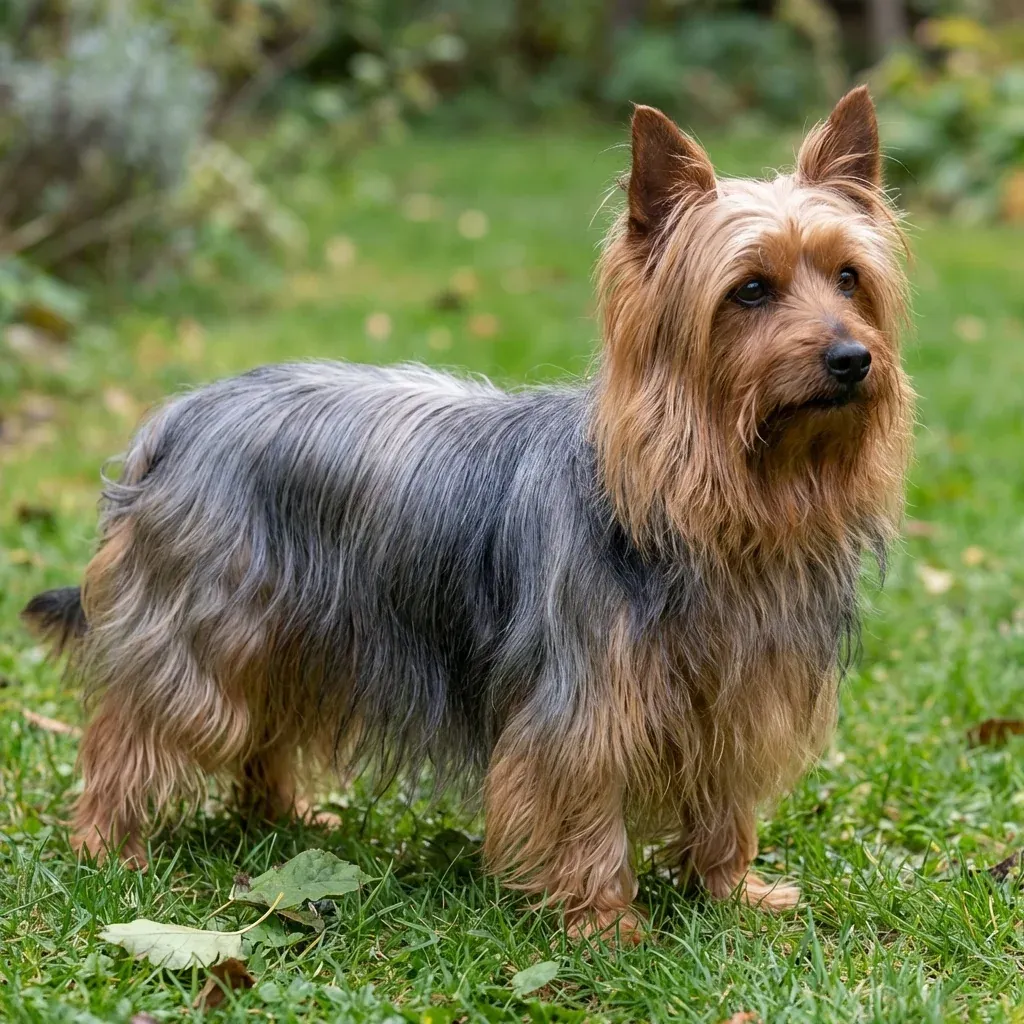
A loyal companion who enjoys both the sofa and the walk.
- Exercise: Daily walks and play are necessary. Not just a “purse” dog.
- Living: Adapts perfectly to apartments.
Health and Care
Generally long-lived and healthy.
- Dental Issues: Common in small breeds, requires regular teeth brushing.
- Patella: Luxating patella can occur.
- Trachea: Use a harness instead of a collar to avoid tracheal collapse.
Needs and Routines
- Grooming: Daily or every-other-day brushing to prevent mats. Regular bathing.
- Climate: Sensitive to extreme cold due to lack of undercoat.
Advertisement
Related guides
Fast paths to harness, leash, training, and fitting guides.