American Foxhound
The American Foxhound is a sleek, athletic scent hound known for its speed, endurance, and musical bay. An easygoing and loyal companion.
Start from the resources hub and jump back to the Dog Breeds index.
Advertisement
Summary
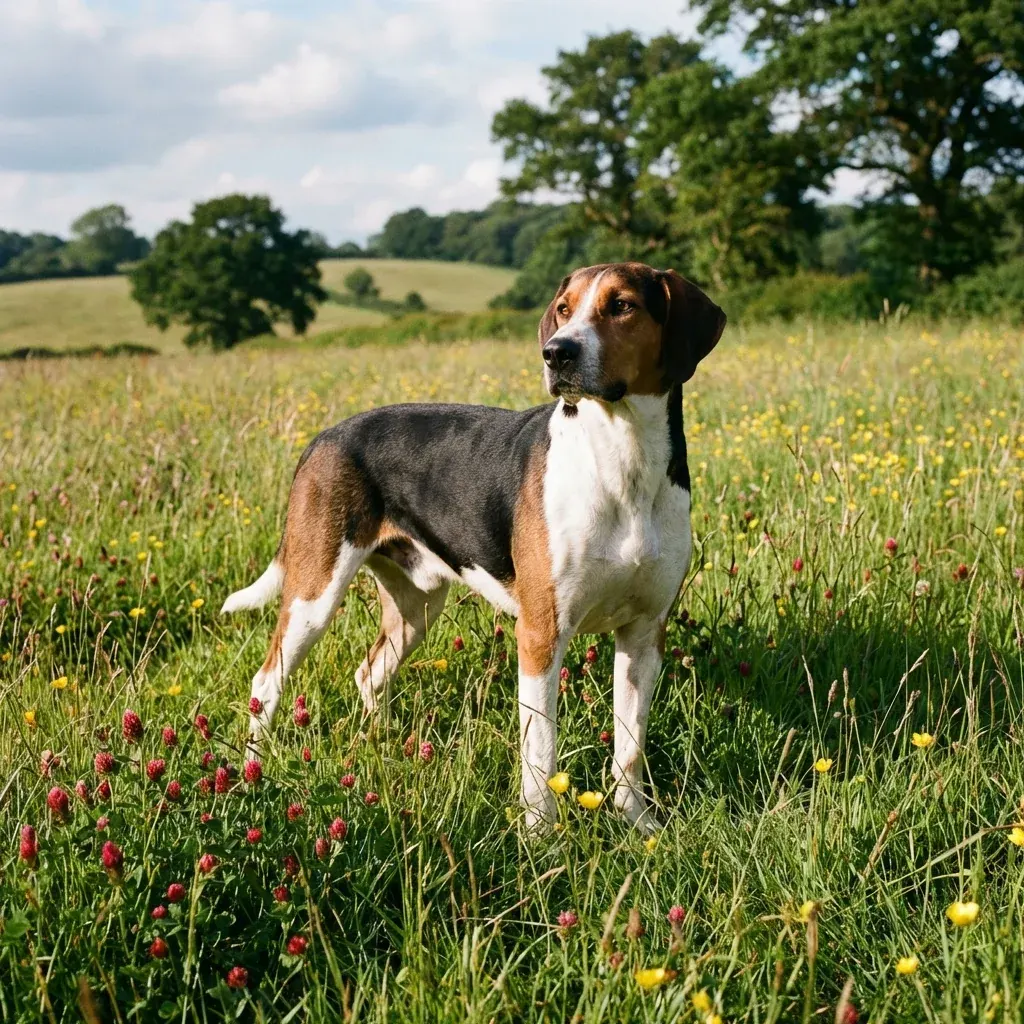
The American Foxhound is one of America’s oldest native breeds. Taller and leaner than its English cousin, it was bred for speed and endurance in the chase. While they are driven hunters in the field, they are known to be docile and sweet-tempered at home.
Origin and History
Developed in the 1700s from English Foxhounds and French hounds imported by George Washington and other early American founders. They were bred to hunt foxes across the vast, rough terrain of the new colonies.
Temperament and Personality
- Sweet-Tempered: Gentle and kind with their family.
- Independent: As scent hounds, they are bred to work independently, which can make them stubborn.
- Sociable: Gets along well with other dogs and humans.
- Vocal: Known for their loud, musical baying.
Physical Characteristics
- Body: Athletic, with long, straight legs and a deep chest.
- Coat: Short, hard, and close.
- Color: Typically tricolor (black, white, and tan), but can be any color.
- Ears: Medium length, set low.
Puppy Stage
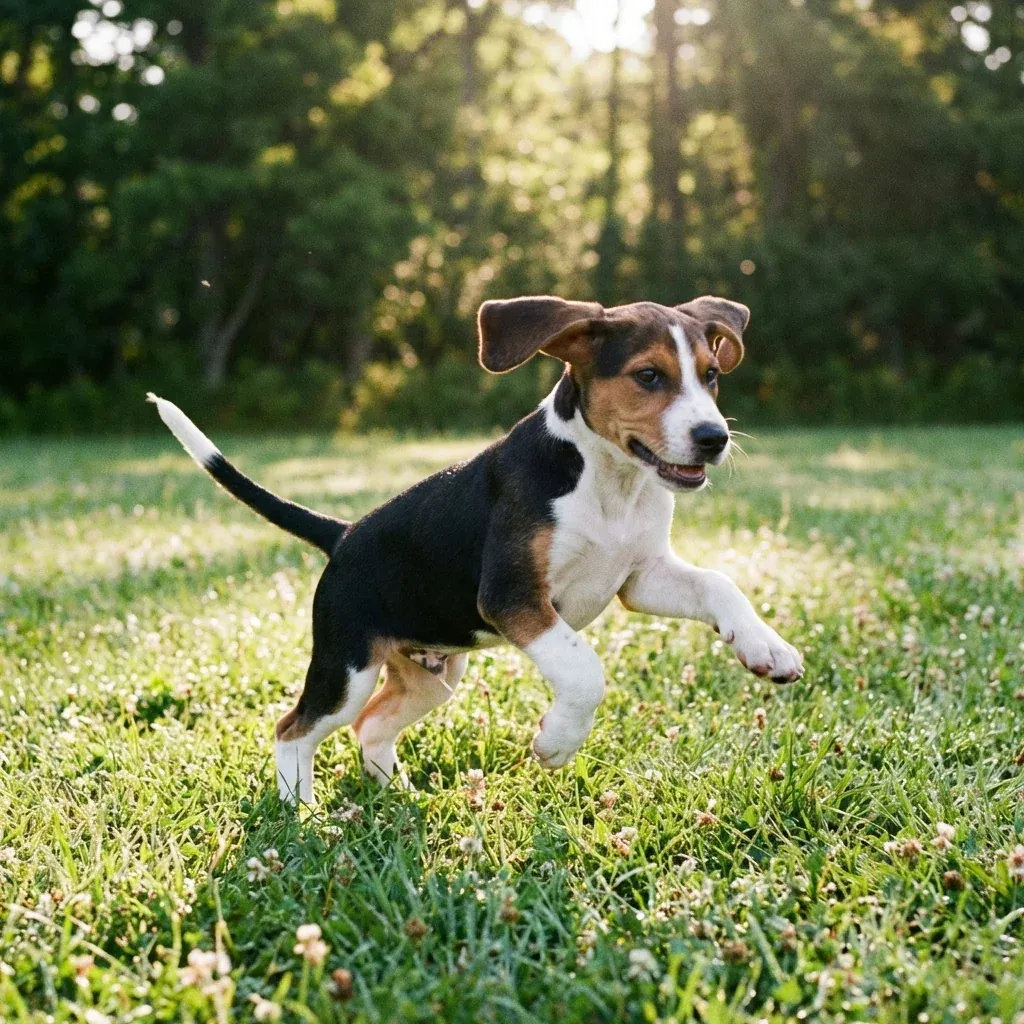
Puppies are active and need patience during training. They may be difficult to recall once they catch a scent. Early socialization helps them adapt to household life.
Adult Stage
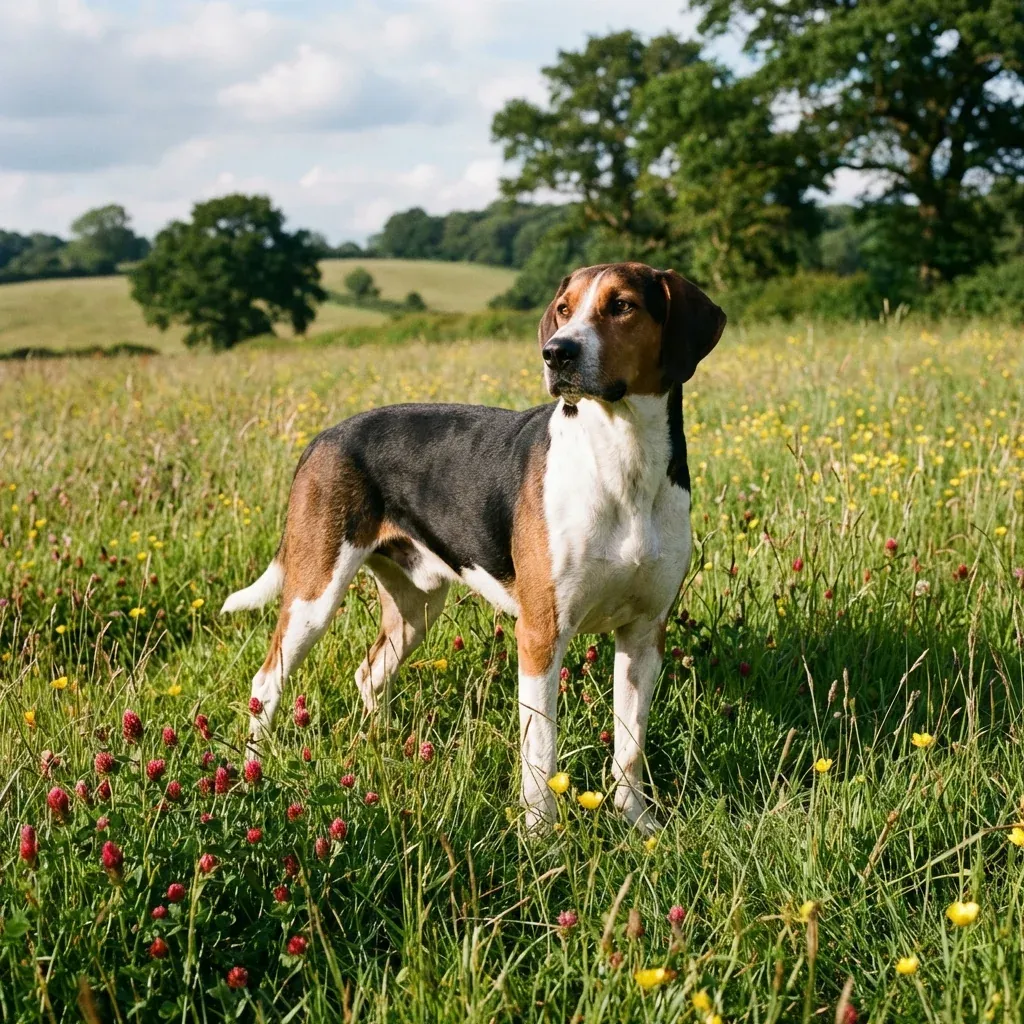
Adults require significant daily exercise. They make great running partners. Without enough activity, they can become destructive or vocal.
Health and Care
- Issues: Generally a healthy breed. Some risk of hip dysplasia and ear infections.
- Grooming: Very low maintenance. Occasional brushing.
Needs and Routines
- Exercise: Very High. Needs a large, fenced area to run.
- Training: Positive reinforcement and patience are key.
Advertisement
Related guides
Fast paths to harness, leash, training, and fitting guides.