Friesian
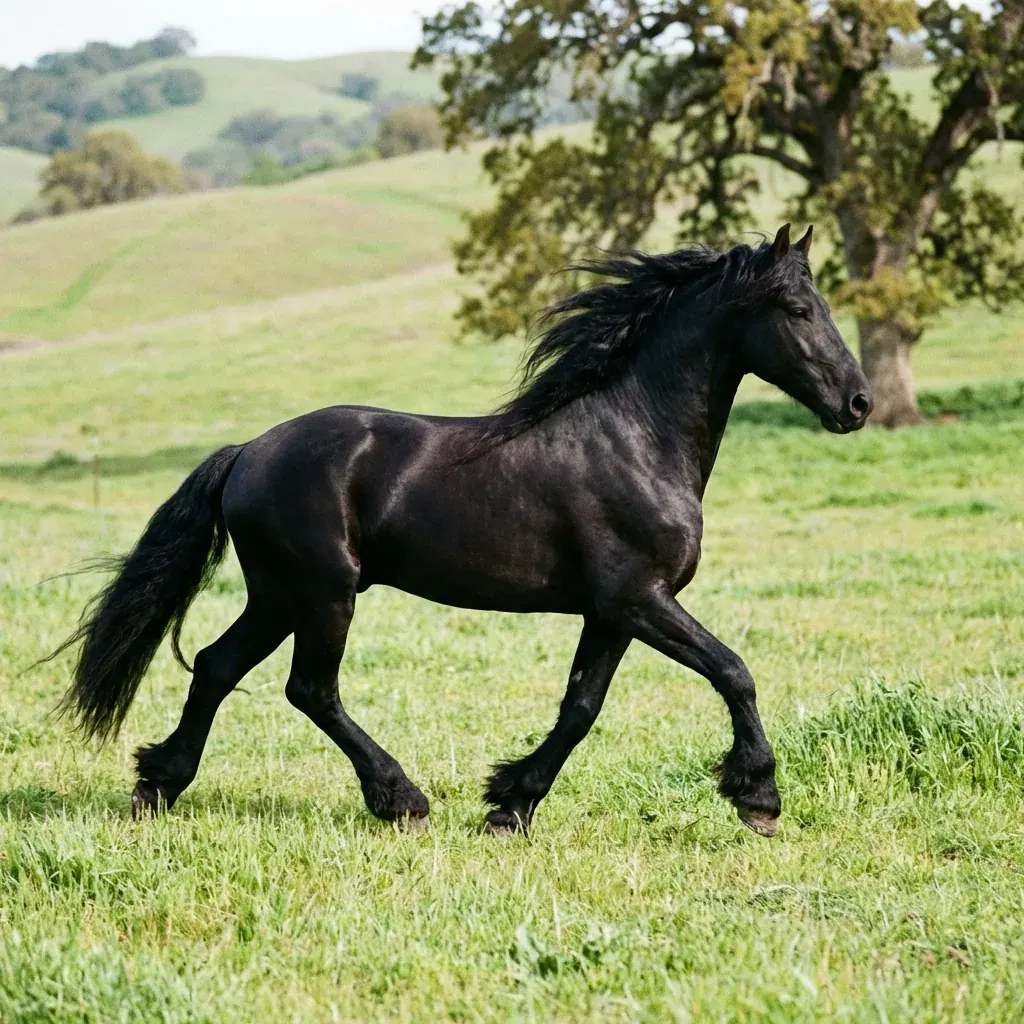
The Friesian is known as the "Black Pearl". Famous for its spectacular black coat, long wavy mane, and elegant movements, it is a dream breed.
Advertisement
Overview
The Friesian is one of Europe’s oldest breeds. Majestic and powerful, traditionally used as a knight’s warhorse and later for carriages, today it excels in dressage thanks to its impressive high trot and nobility.
Origin & History
Originating from the province of Friesland in the Netherlands. During the Middle Ages, they were the preferred warhorses for their ability to carry armored knights. They nearly went extinct in the early 20th century but were saved by a group of enthusiasts.
Temperament & Personality
Despite their imposing size, they are incredibly gentle.
- Docile: Very willing to work and easy to handle (generally).
- Intelligent: Quick learners, making them excellent for film and circus work.
- Sensitive: Respond very well to voice and gentle handling.
Physical Characteristics
Unmistakable. Only black color is admitted (no white markings).
- Mane and Tail: Extremely long, thick, and often wavy. Never cut.
- Feathers: Long hair on the lower legs.
- Neck: Arched and powerful (“swan neck”).
Foal Stage
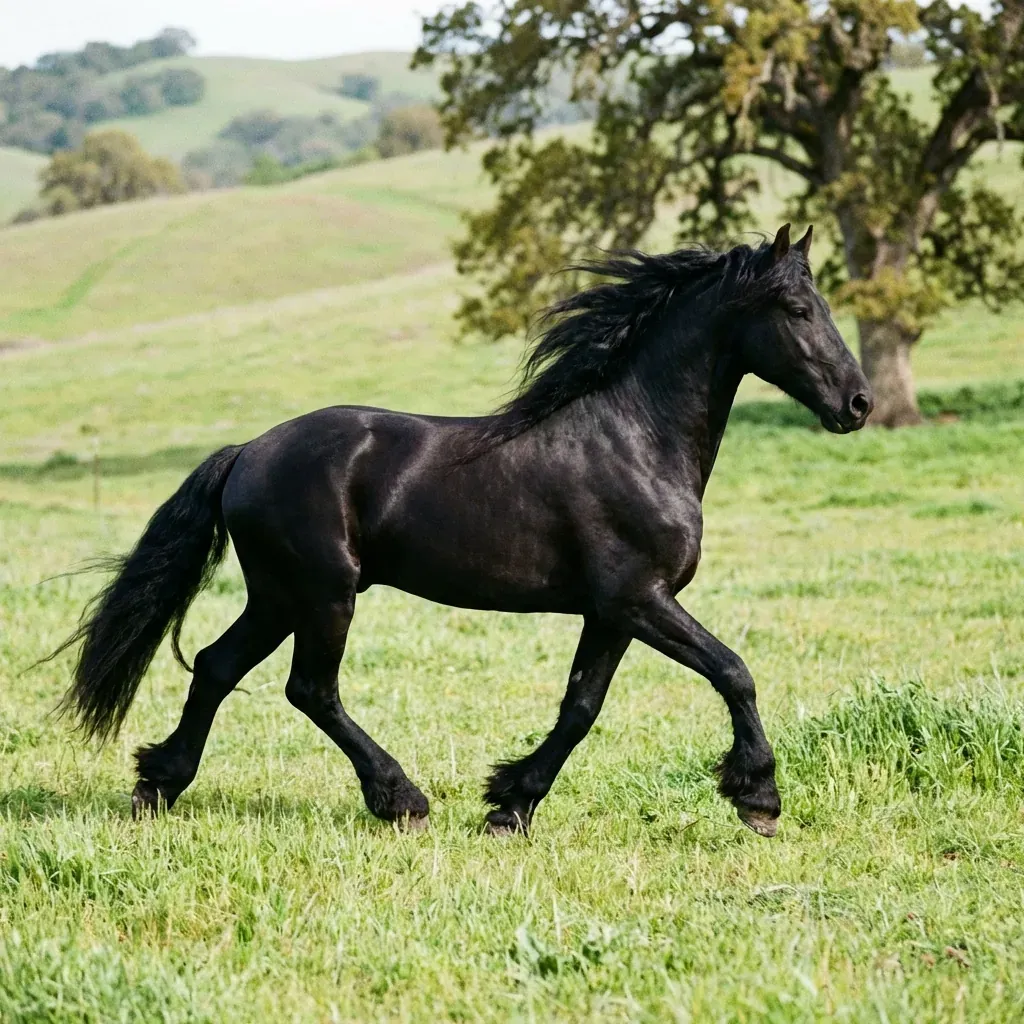
Friesian foals are sometimes born brown or greyish but turn black when they shed their foal coat.
- Growth: Take longer to mature physically than other breeds (up to 5-6 years).
- Handling: Vital to teach them to lift their feet and be groomed from a very young age due to the large amount of hair they will have.
Adult Stage
- Movement: Famous for their high, active trot.
- Use: Excellent in driving (carriages) and increasingly popular in high-level Dressage.
Health & Care
- Skin: Long hair on legs can hide fungi or mites. Requires constant care.
- Inbreeding: Recovering from very few specimens, the breed has genetic issues. Dwarfism and hydrocephalus are risks to watch in breeding.
Needs & Routines
- Grooming: Maintaining that spectacular mane and feathers requires hours of brushing and detangling products.
- Diet: Have an efficient metabolism; be careful with excess sugar.
Advertisement
Best Gear for Friesians
Discover the top-rated harnesses, beds, and toys specifically recommended for this breed.
View Buying Guide